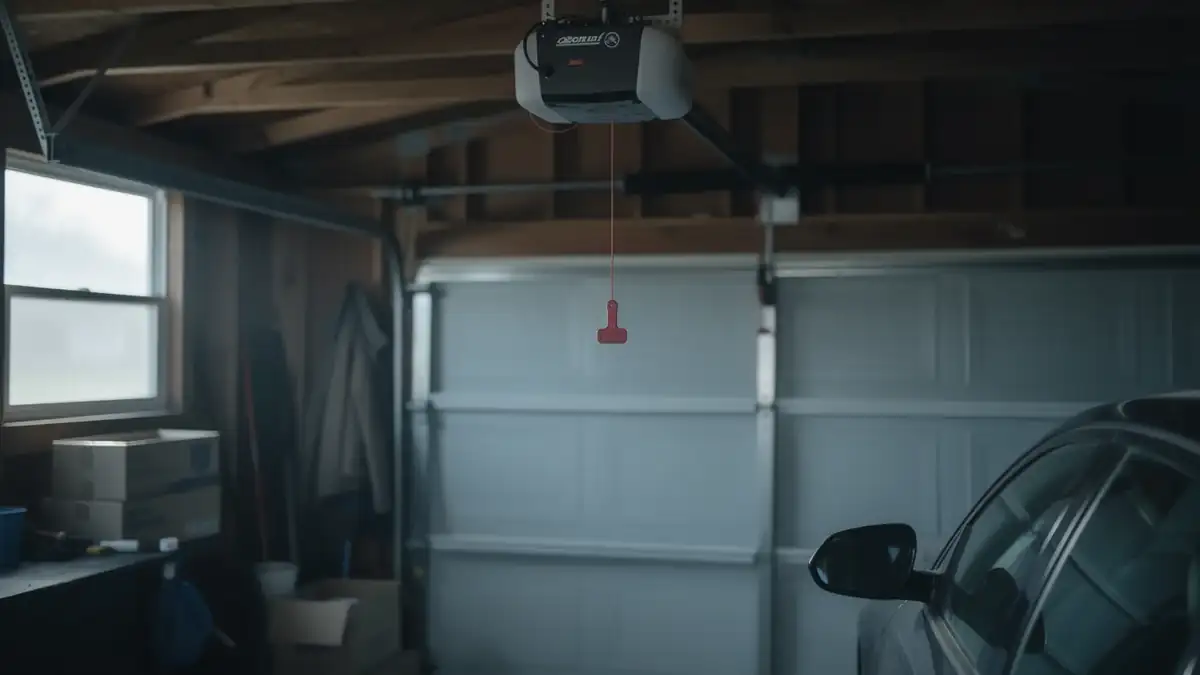
The Situation
A lot of the housing stock around here went up between 1990 and 2004, with the median build year sitting at 1997. That means a big share of the openers bolted to those garage ceilings are original or close to it - pushing twenty-five to thirty-five years old. Across the four older pockets of town, you're looking at openers from the same general era: chain-drive units with circuit boards that were never built to run for three decades in triple-digit heat.
With close to 21,790 households in the service area and 18,319 owner-occupied houses, that's a lot of garages where the opener is quietly past its rated life. Most people don't think about the opener until it stops working mid-cycle, usually on the hottest afternoon of the year, because that's when the motor and the board are both under the most strain at once. It's not a dramatic failure. It's a slow one that ends with the door stuck half-open or not responding to the remote at all.
Leaving It Alone
An opener that's starting to fail doesn't usually announce itself
It gets slower to respond, the light blinks before the motor engages, or the door reverses for no reason you can see. Leave that alone through another summer and you're not saving money - you're waiting for the part to fail at the worst possible time, which around here is usually during a heat event when you need the garage closed to keep the heat out of the house.
There's also a security angle
An opener board that's degrading can stop recognizing the remote's rolling code properly, which sometimes means the door won't lock down tight even when it looks closed. For a household relying on the garage as extra storage or workspace - common in a service area with a median household income around $76,259, where garages do real double duty - that's not a small thing to ignore. The honest truth is that once a board starts failing intermittently, there's no reliable fix short of replacing it. Patching an aging board rarely holds.
- $76,259 median household income
What the Weather Here Does to It
The climate band here is rated severe heat, and that heat is hard on the electronics inside an opener housing long before it's hard on the door itself. Circuit boards are rated for a working temperature range, and a garage ceiling in direct summer sun can sit well above it for hours at a stretch. That's when you get thermal shutdown - the opener just stops responding until things cool down, which can be late evening.
Heat also strains the grid. Summer afternoons bring higher load across the area, and brief power interruptions during peak heat aren't unusual. An opener with no battery backup just stops wherever it is when the power cuts, and if that happens while the door's halfway up, it stays that way until the power's back or someone pulls the manual release. For openers already near the end of their life from age alone, a string of hot afternoons with grid strain on top is usually what pushes them over.
What to Check
Start with the age. If your opener went in around the same time as the house - anywhere in that 1990 to 2004 window - assume the board and motor are both near the end of what they were built for, even if it still runs most days. Second, check whether it has battery backup. A lot of units from that era don't, which means any power cut leaves the door exactly where it was.
Third, run the manual release at least once and make sure it's not seized - heat and dust bind these up over the years and nobody notices until they need it. Fourth, listen to the motor on a hot afternoon. A strain or hum that wasn't there in the morning is the board or motor working harder as it heats up, and that's an early sign, not a one-off. We don't stock every opener model on the truck, so if yours is an older or less common unit, expect a short wait on the exact part.