Serving Queen Creek, AZ & nearby
(928) 403-7192
Queen Creek, AZ

What We Actually Do When We Show Up

A look at what a garage door service call in Queen Creek actually includes, tied to the area's 1990s-2000s homes and the heat that wears springs and openers down fast.

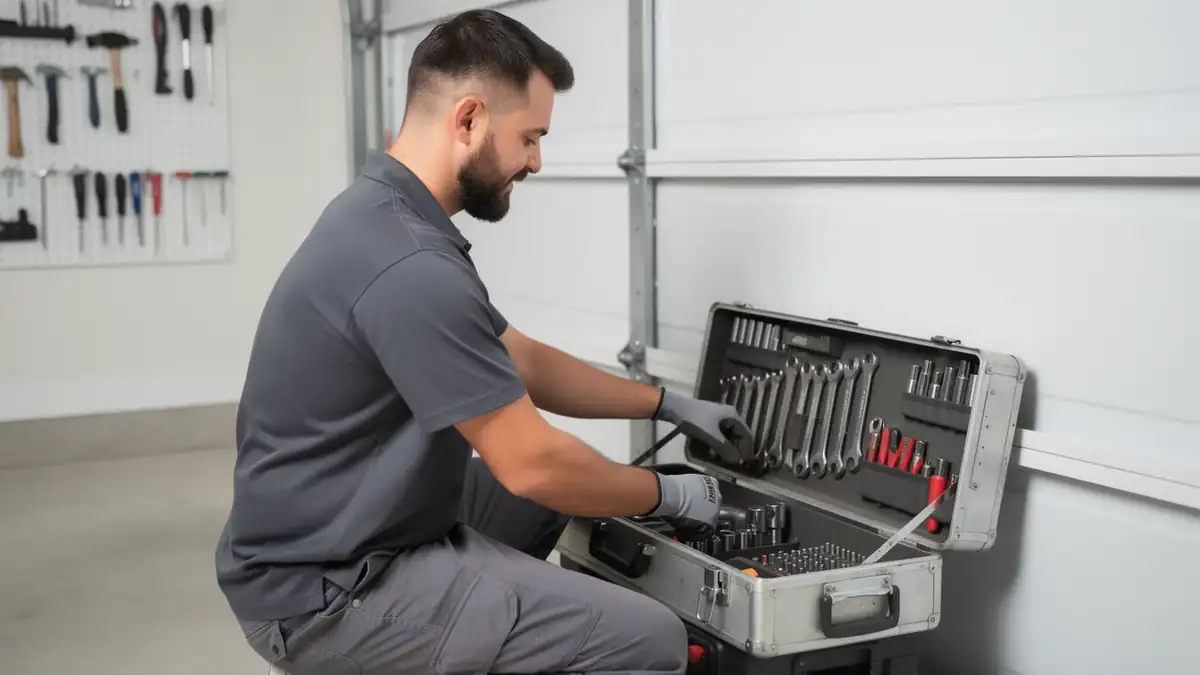
A technician wearing gloves is selecting a tool from an open toolbox in a garage.

The Situation

Most of the garages we work on here went up between 1990 and 2004, with a median build year around 1997. That's a narrower window than a lot of towns, and it matters because it means the doors, openers, and track hardware across are mostly the same generation of parts wearing out at the same time. A service call in this area isn't guesswork about what era of hardware you'll find under the hood - we already know the range. The service area covers roughly 21,790 households and 18,319 owner-occupied houses, and a large share of those garages are original installs from that same 15-year stretch, not retrofits. That consistency shapes what a call looks: we're usually diagnosing the same handful of failure points - torsion springs rated for a specific cycle count, openers from the same handful of manufacturers common in new-build tract homes of that period, and steel track that's had two-plus decades of Arizona heat on it.

Leaving It Alone

A call isn't always a repair. Sometimes the honest answer is that the door is fine and the noise is a dry hinge. We tell you that instead of selling a job, because a household income median of $76,259 in this area means most people here are budgeting for the actual problem, not padding an invoice. Where we draw the line: if a spring on a 1990s-build door is original, we'll usually recommend replacing it rather than patching it, since that hardware is past the manufacturer's rated cycle life regardless of how it looks. We don't do cosmetic panel touch-up work - if the door's structure is sound but the finish is faded from years of sun, that's a paint job, not a service call, and we'll say so rather than invent a fix. Leaving a worn cable or frayed strand alone because it 'still works' is the one thing we won't sign off on - that's a safety call, not a judgment call.

What the Weather Here Does to It

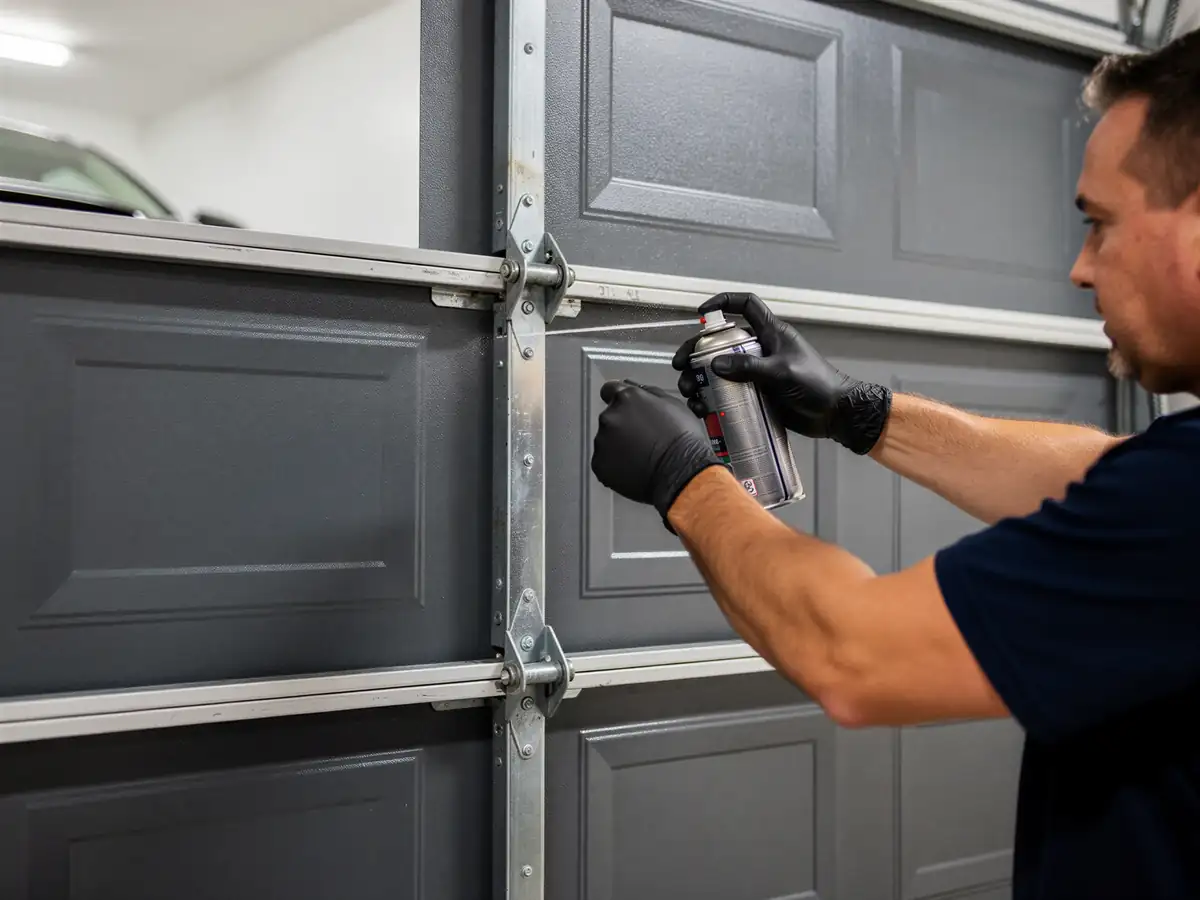
This area sits in a severe heat climate band, and that's the single biggest driver of what we see on a service call. Steel expands and contracts across triple-digit summer days and cool winter nights, and over a 20-to-30-year-old door - which describes most of the stock here - that cycle loosens fasteners, dries out nylon rollers, and breaks down the lubricant on torsion springs faster than it would in a milder climate. Openers take a hit too: circuit boards and sensors mounted in an unconditioned garage spend months at attic-level heat, which shortens their working life compared to the same unit in a cooler region. On a call, that means we're checking roller condition and spring lubrication as a matter of course here, not as an upsell - in this heat, it's the first thing that fails, and it fails earlier than the manufacturer's spec sheet would suggest for a shadier climate.

What to Check

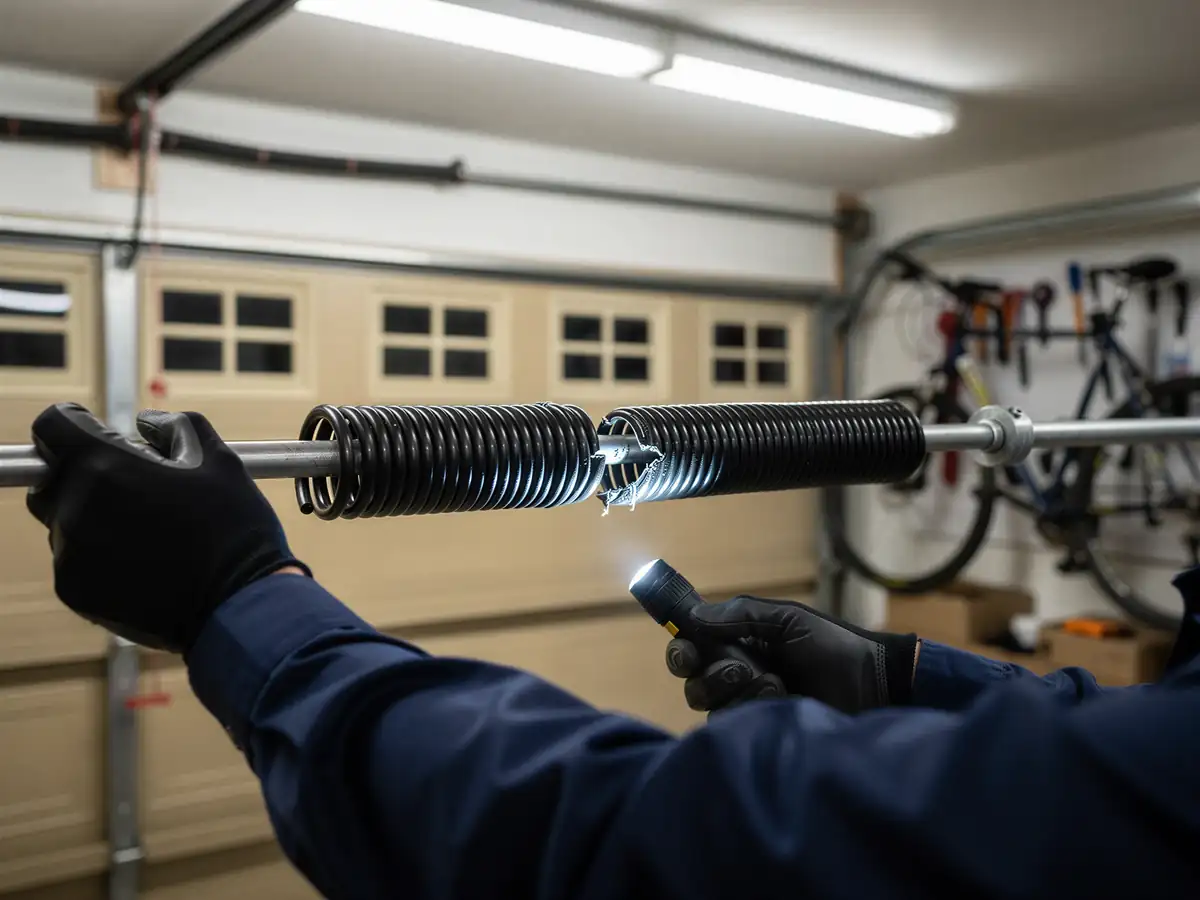
Before you call, there are a few things worth looking at yourself, especially if your house falls in that 1990-2004 build window common across this area. Check the torsion spring above the door for visible gaps in the coil - a separated spring is urgent, not a wait-and-see item. Listen for grinding or popping from the rollers; on a house this age, original rollers are almost always the plastic kind that wears out well before the door itself does. Look at the opener's logic board area for heat discoloration or a sensor that no longer lines up - both are common on garages that have spent two-plus decades facing direct summer sun. One limitation worth naming: we can diagnose most of this over the phone, but we can't quote a torsion spring replacement without seeing the spring in person, since spring sizing depends on door weight and wind load, and guessing wrong means a second trip.
How it works

From “it’s stuck” to “it’s fixed”

A quick, honest process - no guesswork and no surprises.

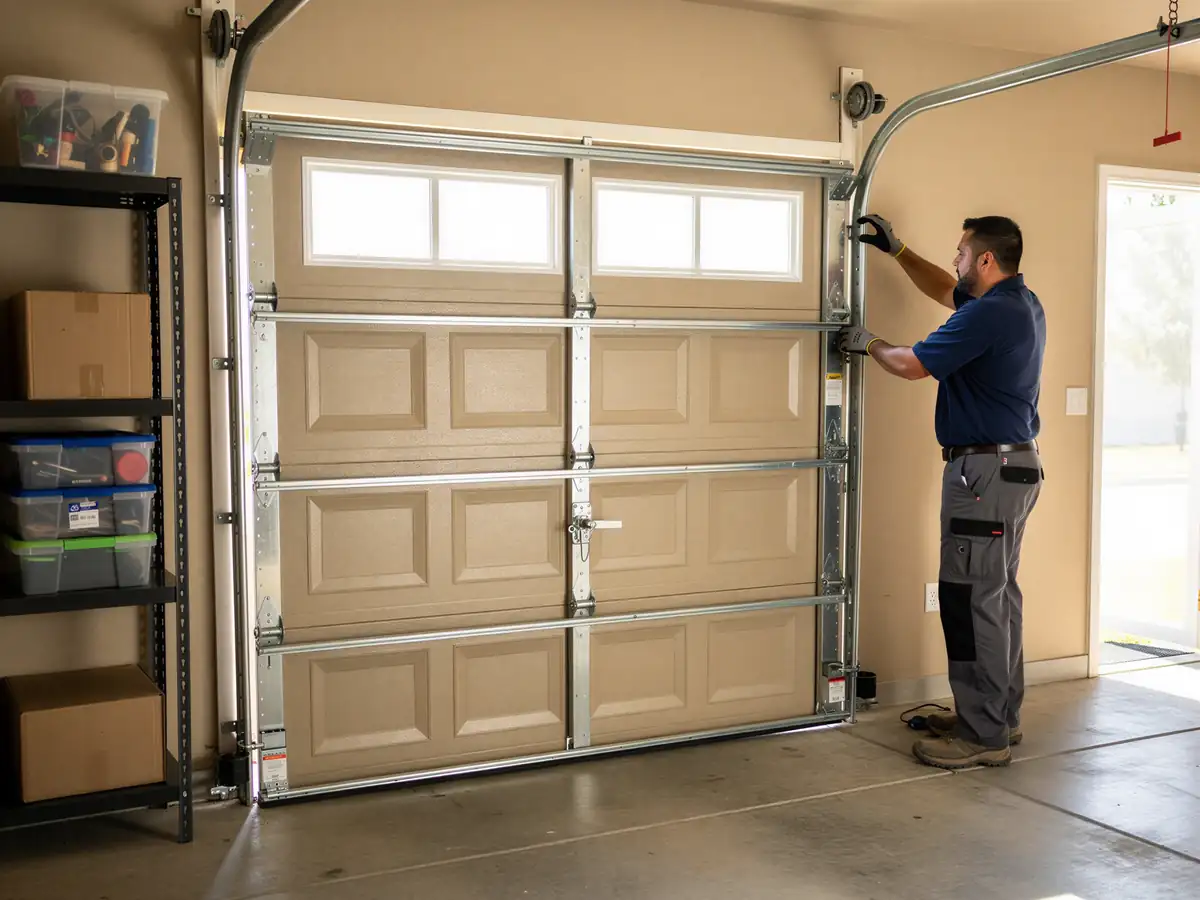
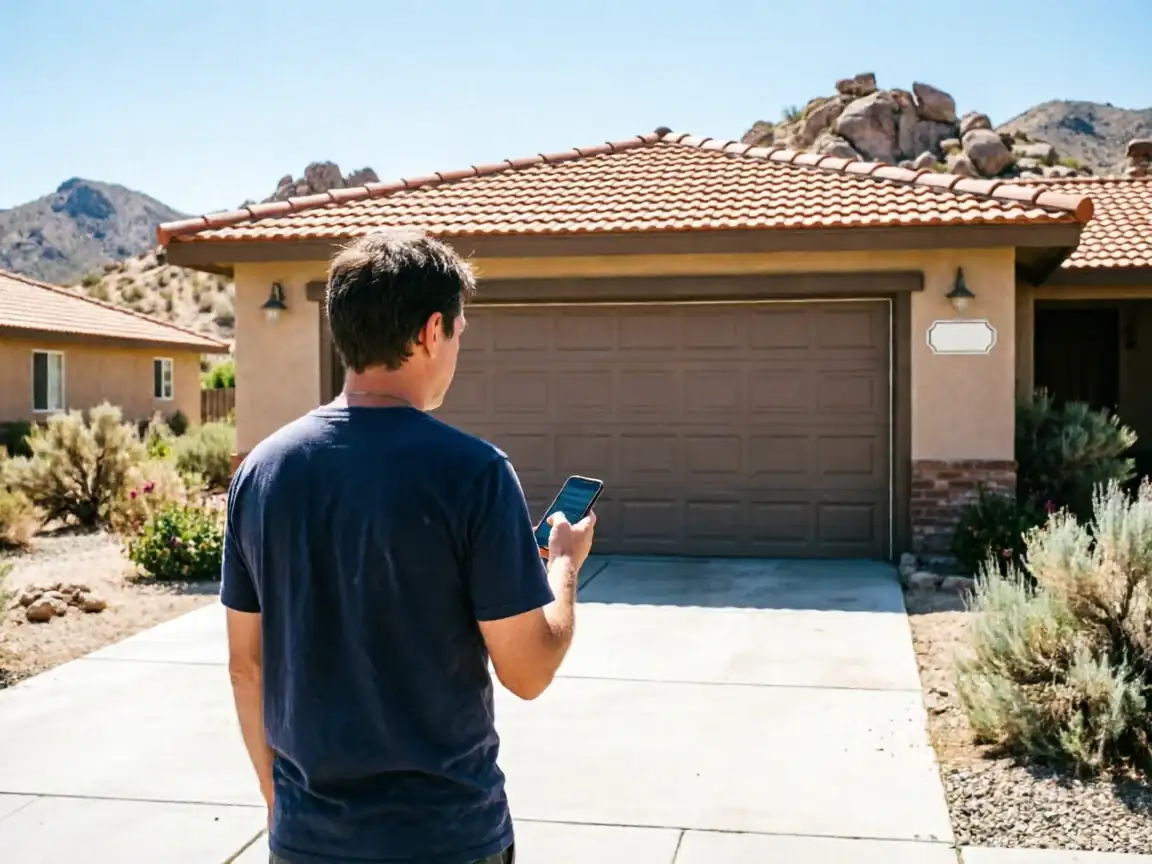
  1. A man stands in a driveway looking at a brown garage door.
    1

    Tell us what’s wrong

    Describe the symptom - won’t open, loud bang, opener runs but the door won’t move.

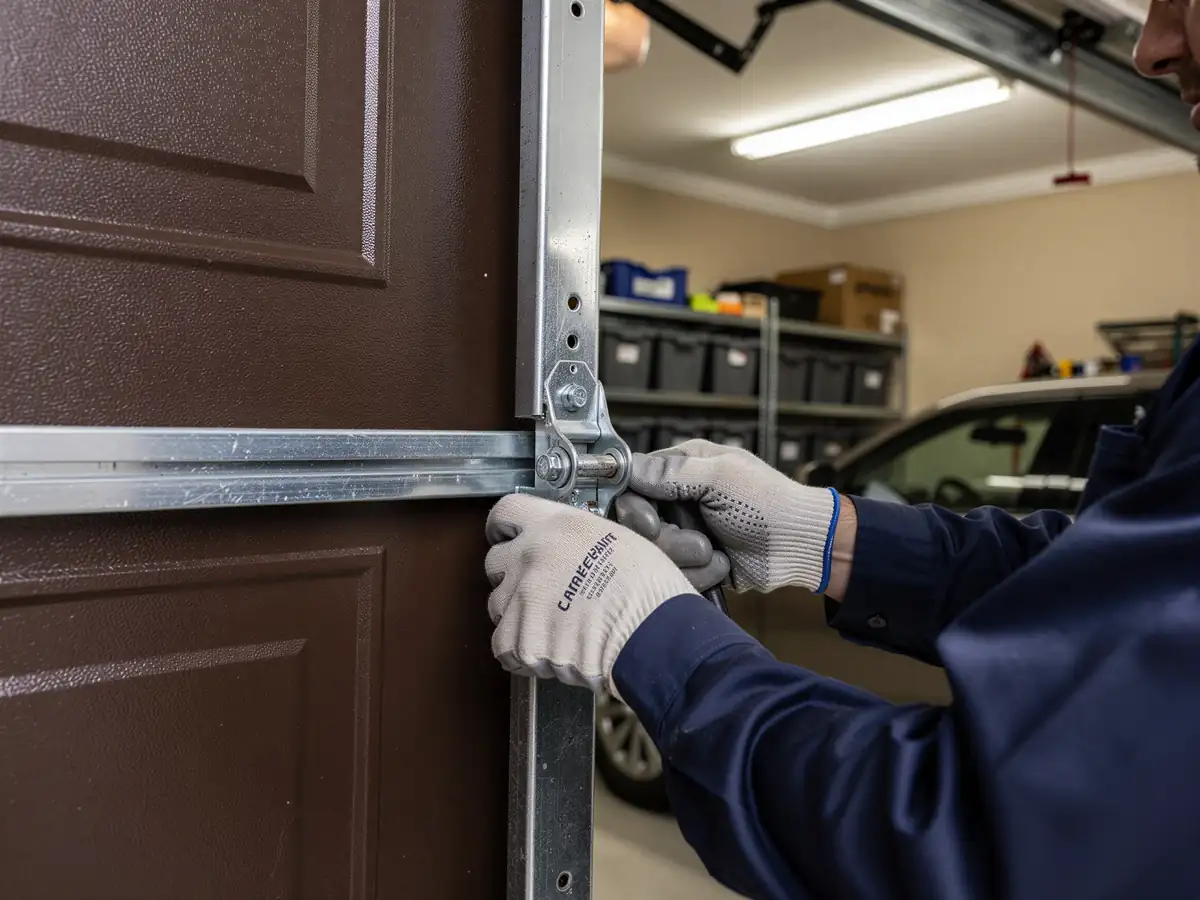
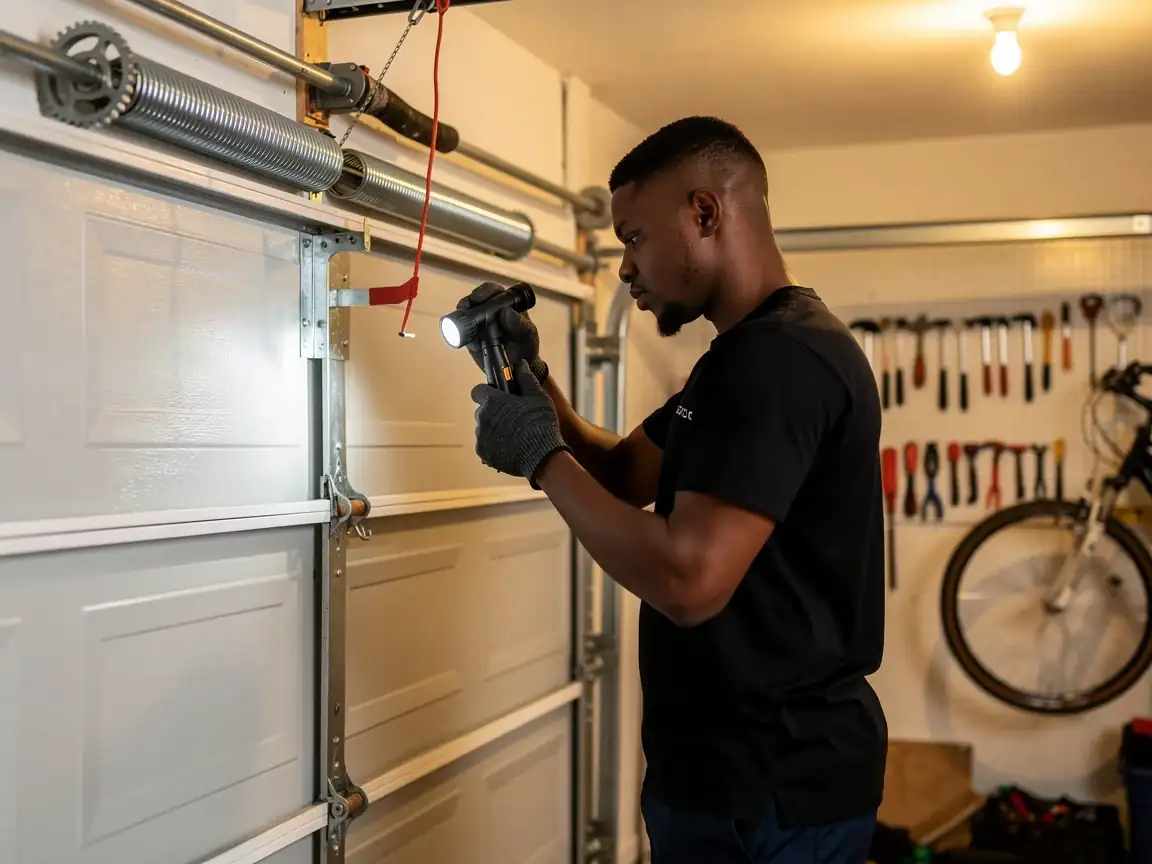
  2. A technician shines a flashlight on the garage door's top panel and roller.
    2

    On-site diagnosis

    A technician tests the door under power and by hand and finds what actually failed.

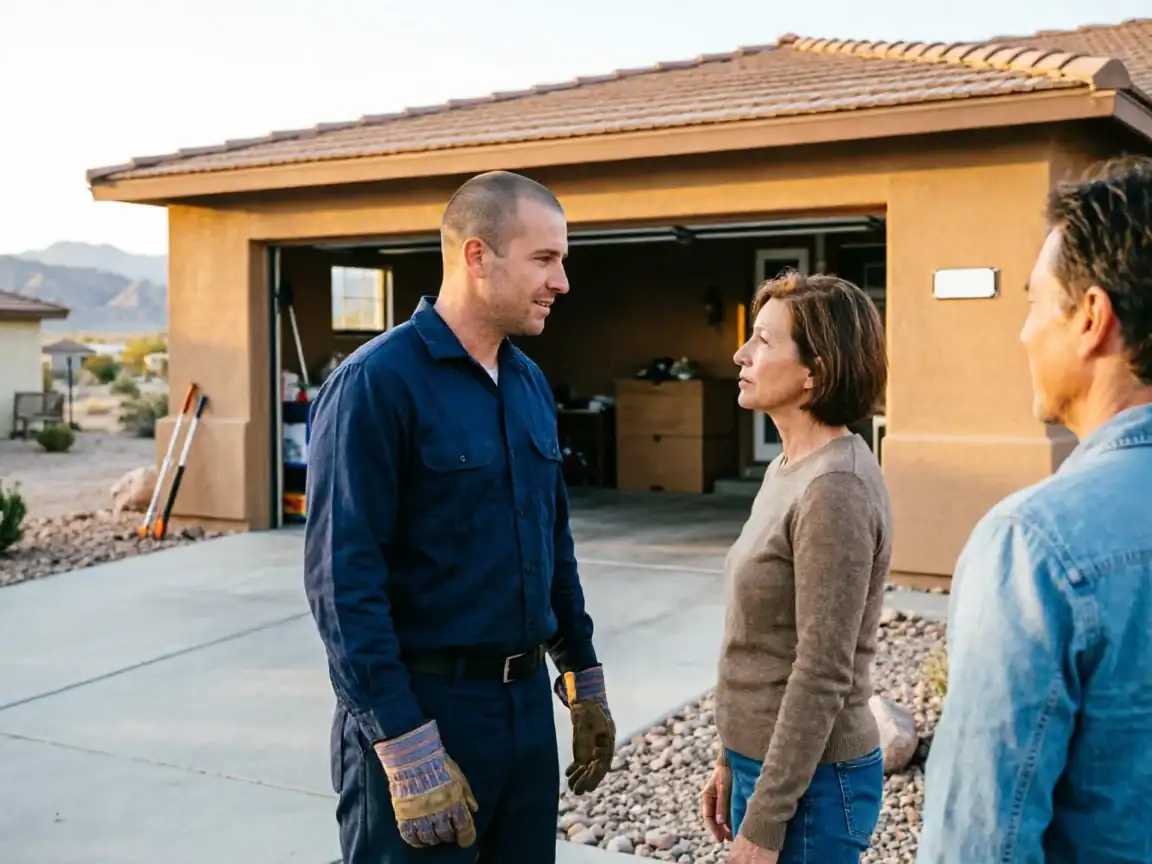
  3. A technician in a blue uniform talks to a woman and a man in front of a garage.
    3

    Clear, up-front plan

    You get the fix that’s needed and what drives the cost - before any work starts.

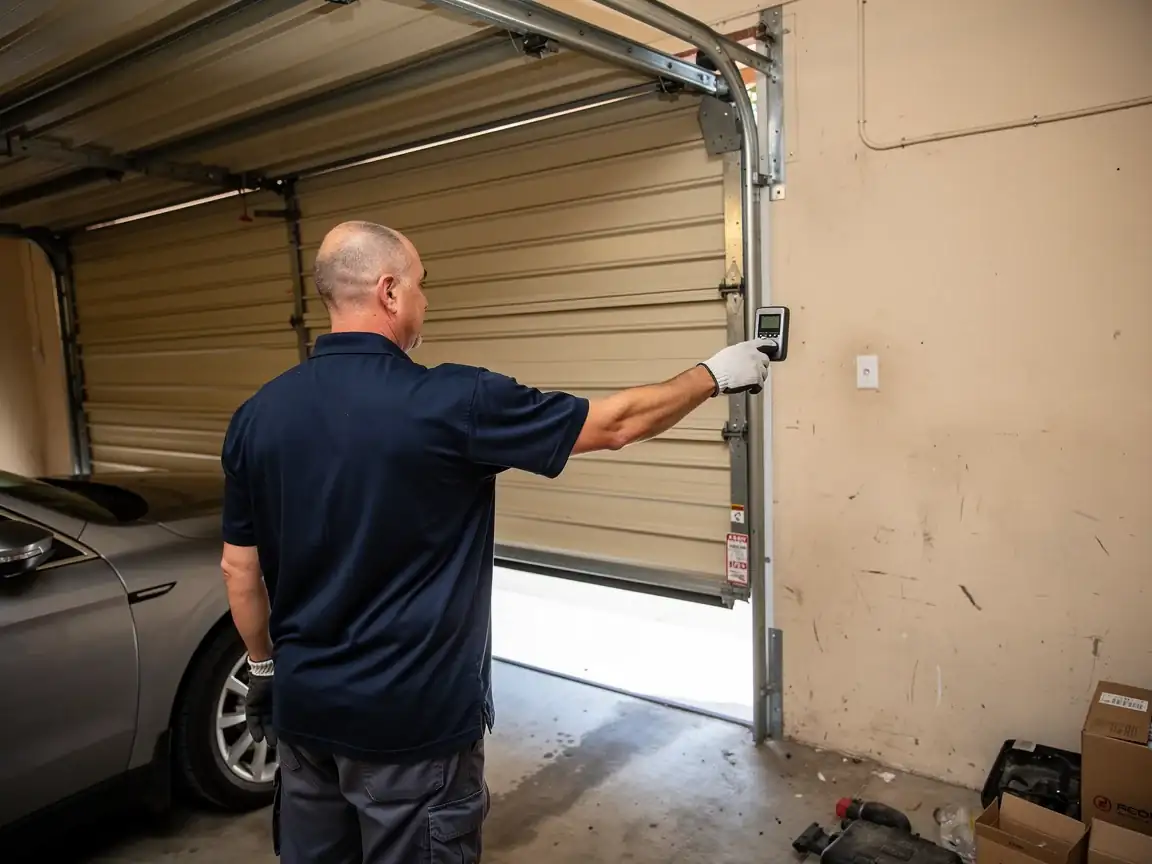
  4. A technician holds a remote control while standing next to an open garage door.
    4

    Repaired & tested

    The repair is done, the door is set true and tested, and the work area left clean.

Not sure which repair your door needs in Queen Creek, AZ? Describe what it’s doing - every job starts with a diagnosis.

How we work

What to expect

  • Diagnosis firstEvery visit starts by finding what actually failed - not a pre-written parts list.
  • The right part for the doorSprings and openers matched to the door’s weight and age, so the fix holds up.
  • Straight answersWhen a repair makes more sense than a replacement - or the reverse - you hear it plainly.
  • Clean, careful workTension released safely, hardware set true, the door tested under power before we leave.
What we do

Garage Door Services

Repair and installation work for Queen Creek homes and businesses.

Questions

Frequently asked

Straight answers about garage door repair in Queen Creek. Still unsure? Ask us directly.

How old is a typical garage door in Queen Creek before it needs a service call?

Most homes in this area were built between 1990 and 2004, so a lot of original doors and openers are now 20 to 30 years old. That's past the rated life of most torsion springs and plastic rollers, which is why service calls here often start with spring and roller condition rather than something more exotic.

Does the heat really affect garage door hardware that much?

Yes. This area sits in a severe heat climate band, and the daily swing between hot afternoons and cooler nights puts real stress on steel springs, track, and plastic components. Lubricant breaks down faster, rollers dry out sooner, and opener circuit boards in unconditioned garages age quicker than they would in a milder climate.

Will you tell me if a repair isn't worth it?

Yes, and we'd rather do that than run up a bill. If a door from the 1990s-era stock common here needs more than a spring and a few rollers to be safe, we'll say so plainly instead of nickel-and-diming a repair on hardware that's already past its working life.

Ready to get your garage door sorted?

Tell us what it’s doing and where you are in Queen Creek - we’ll take it from there.

Request a QuoteCall