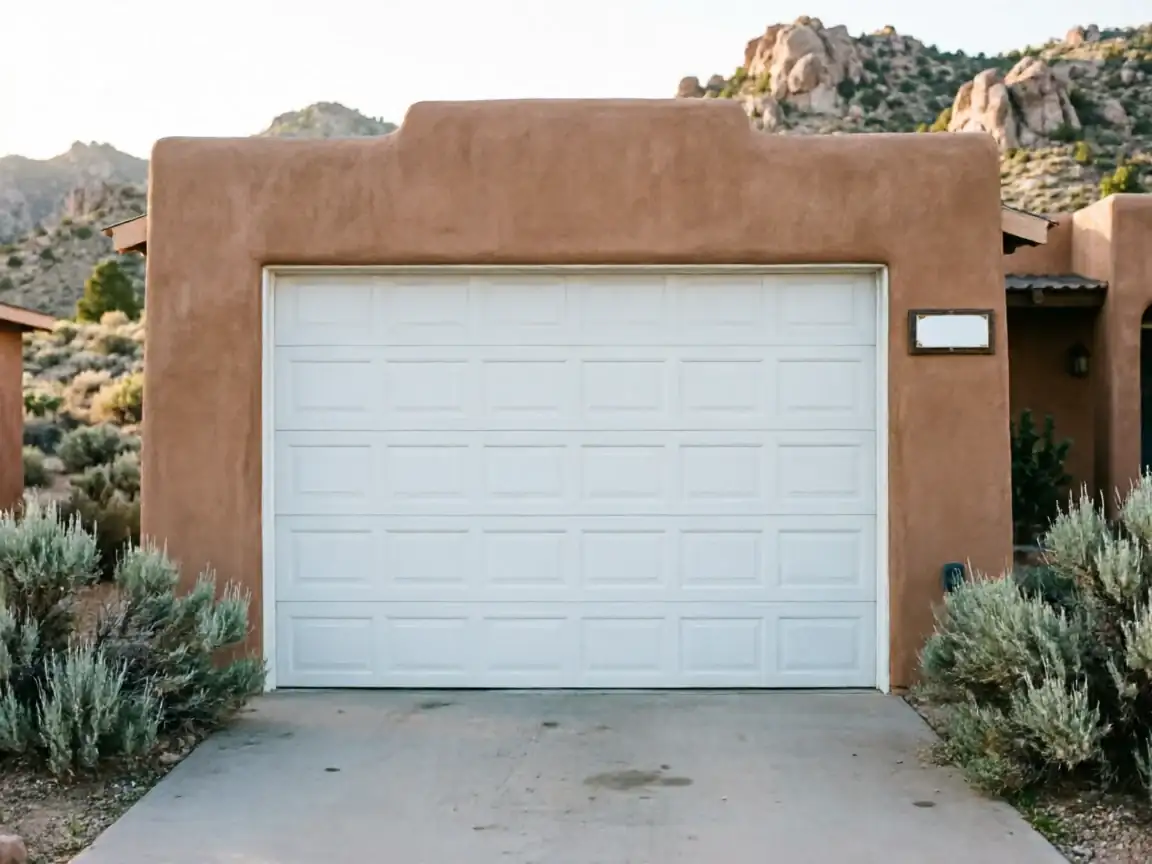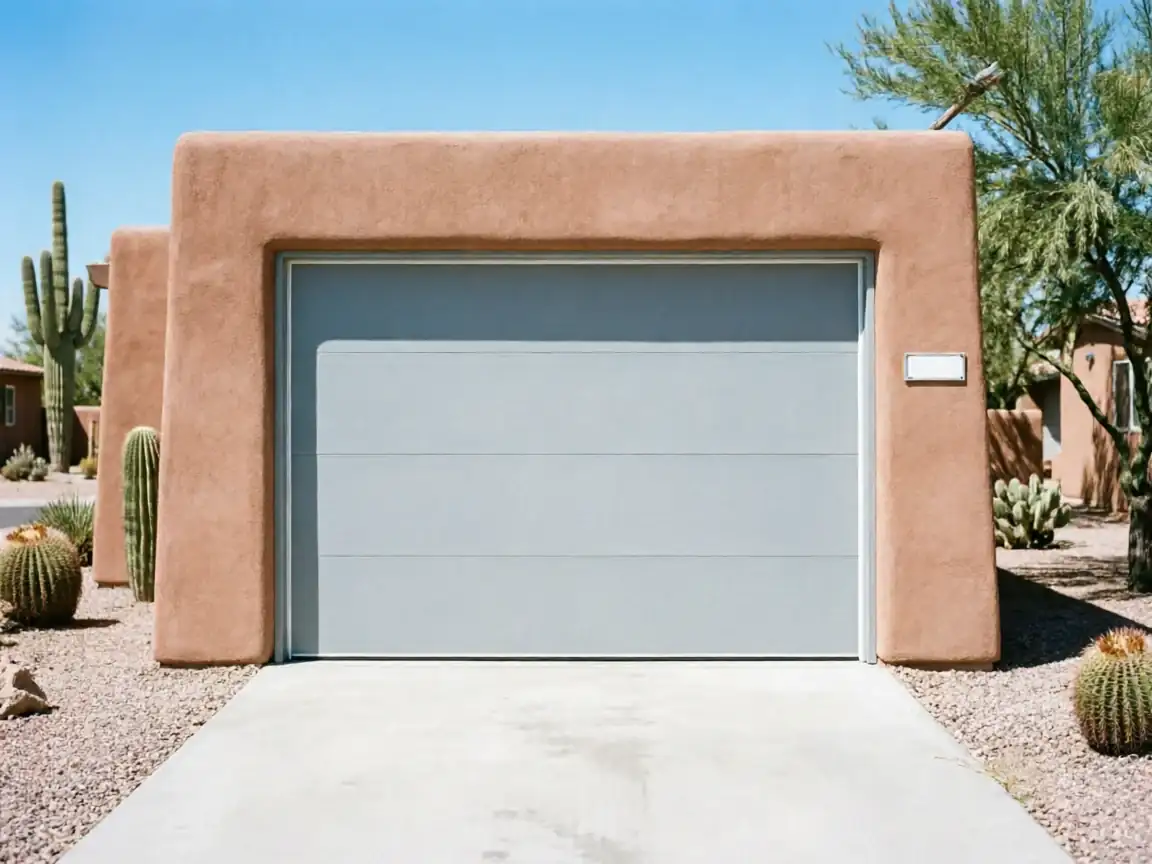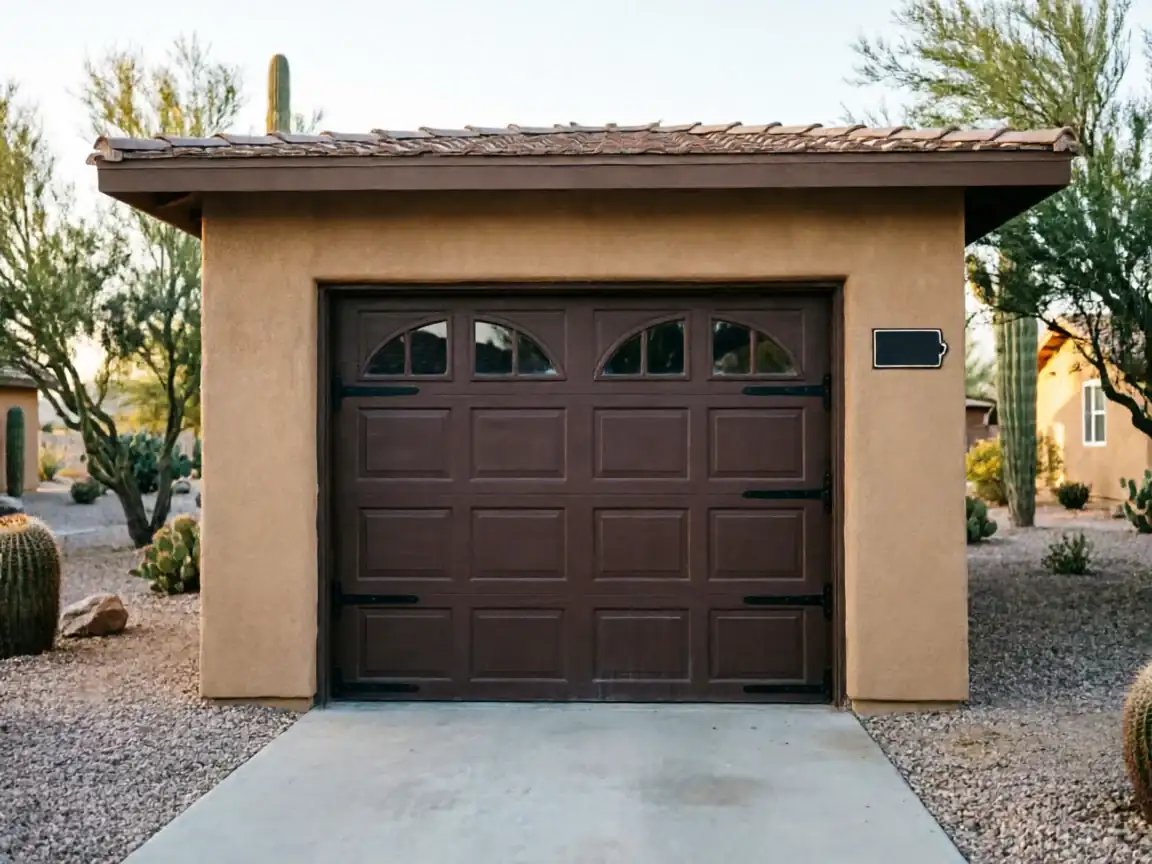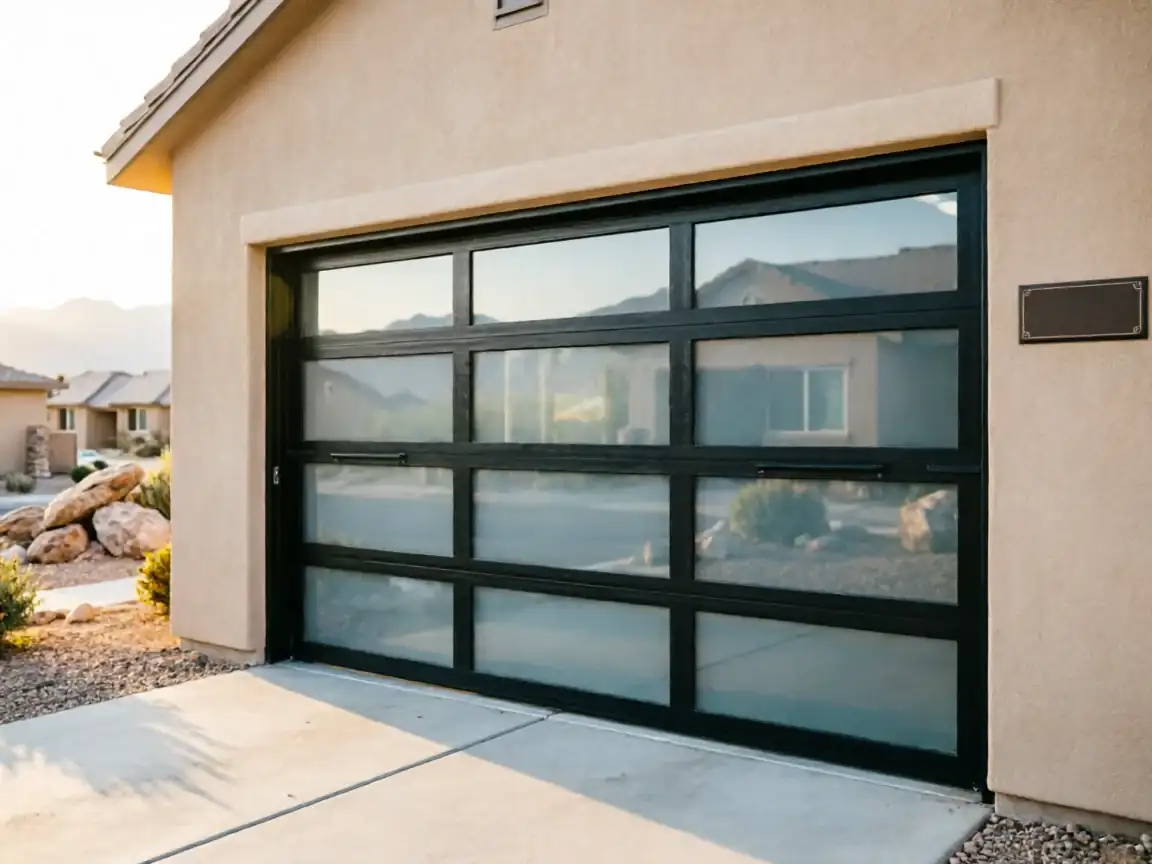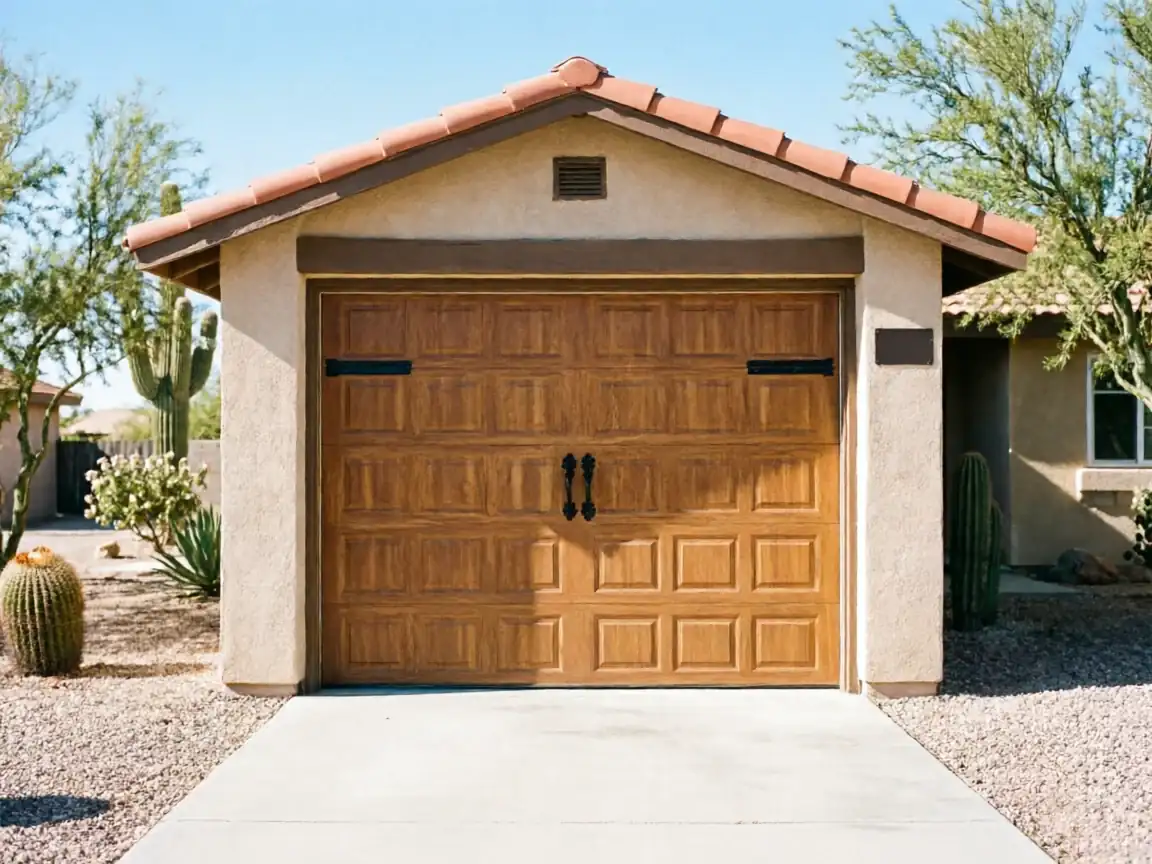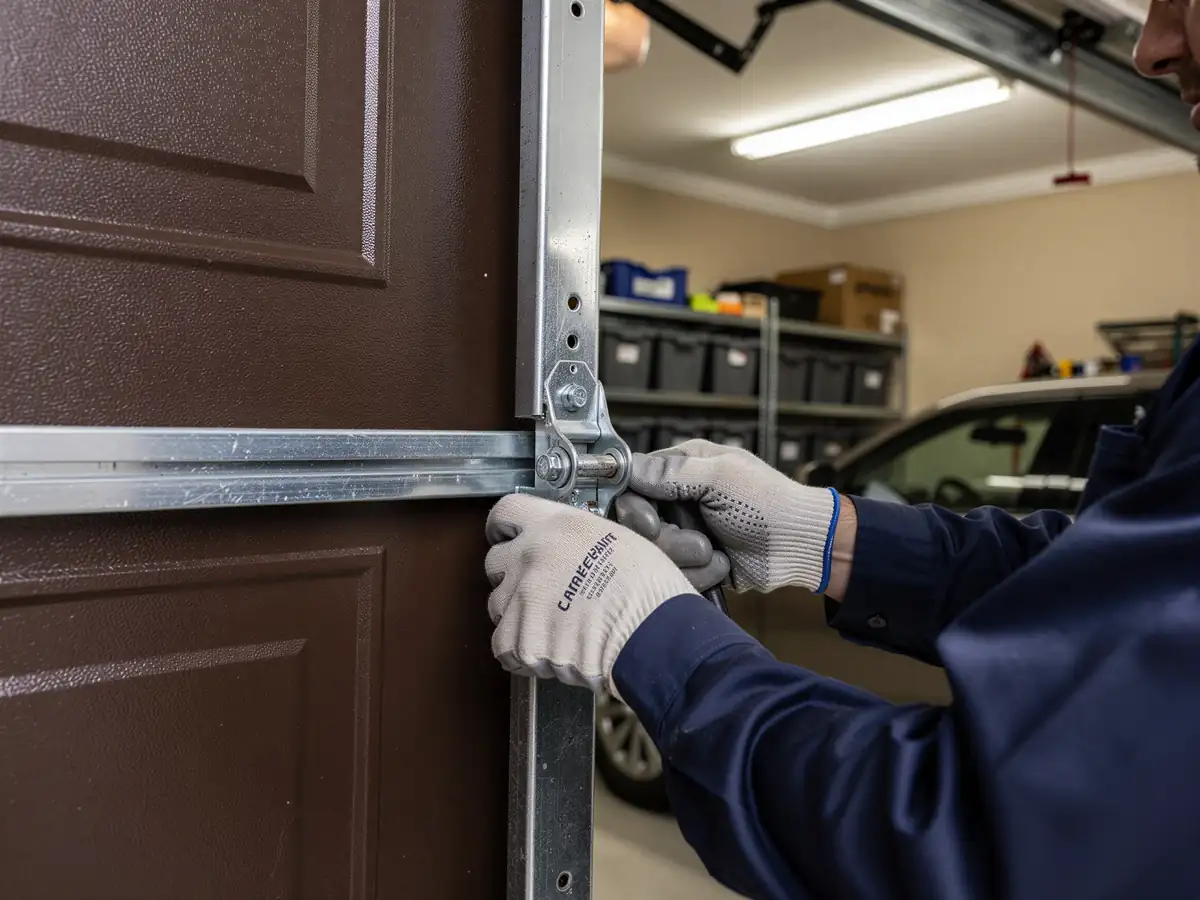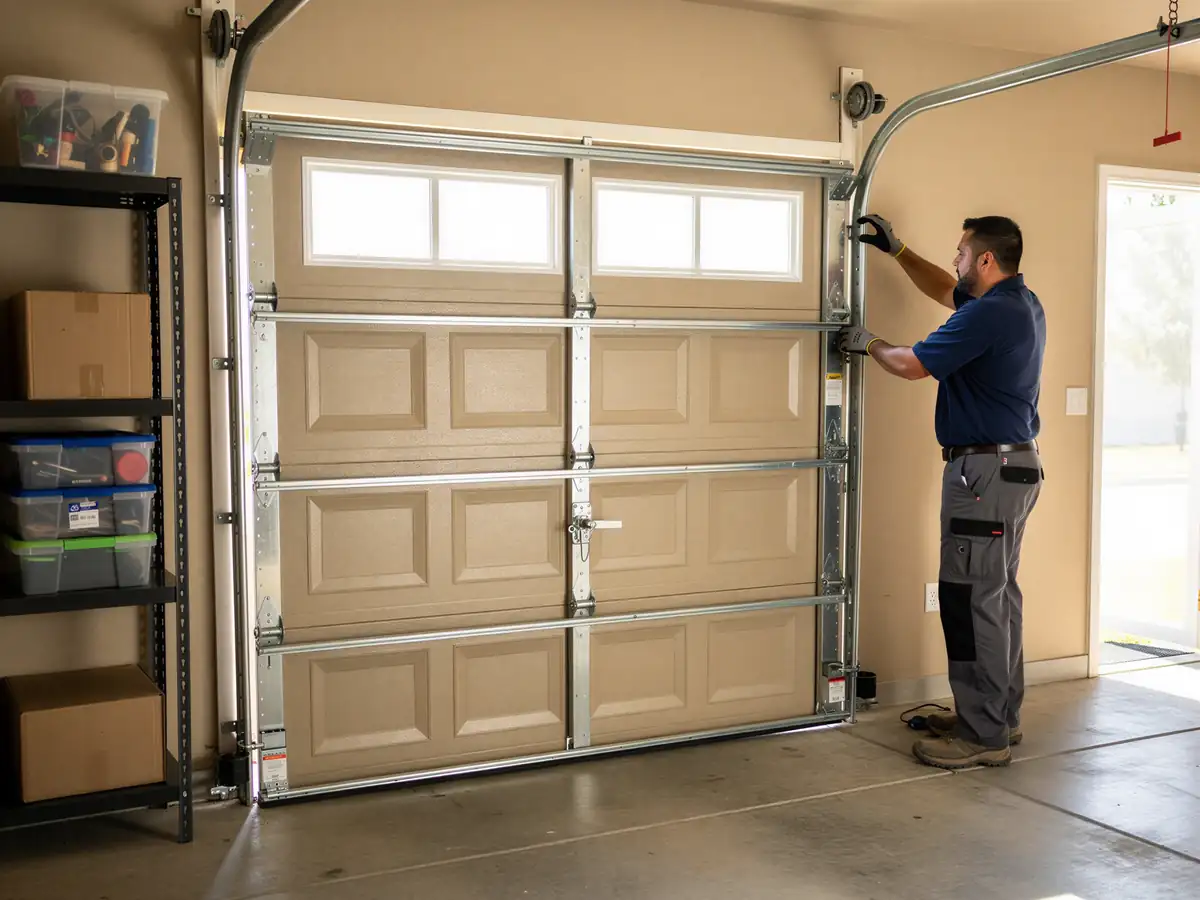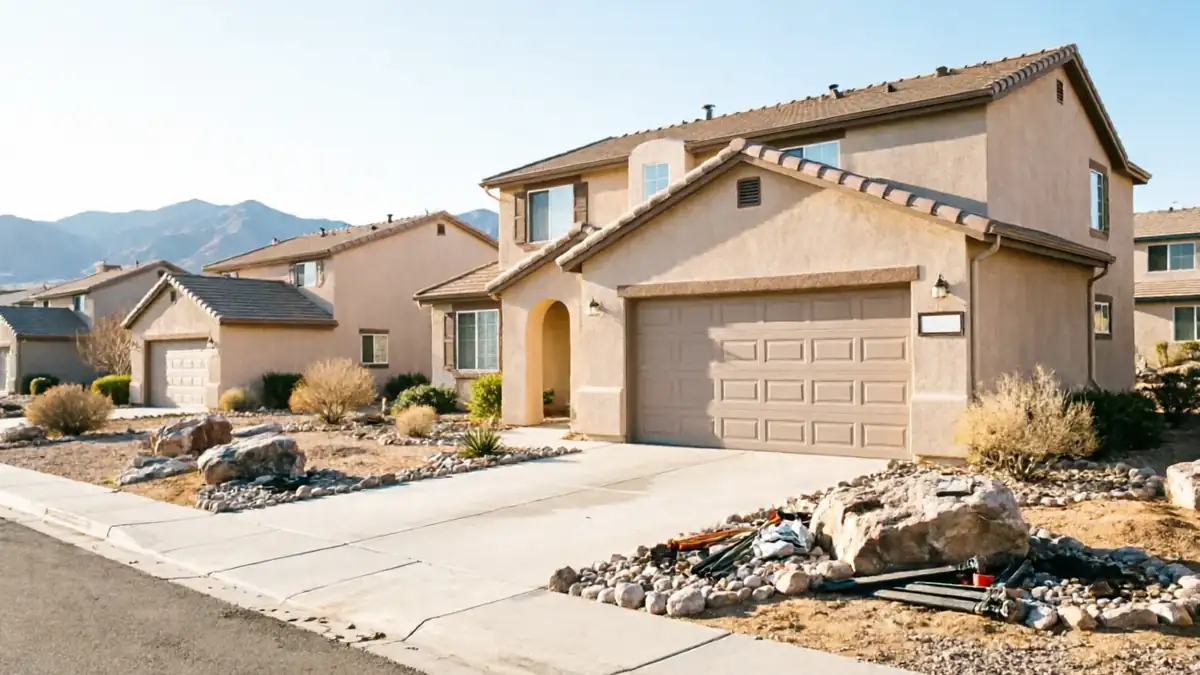
What Causes It Around Here
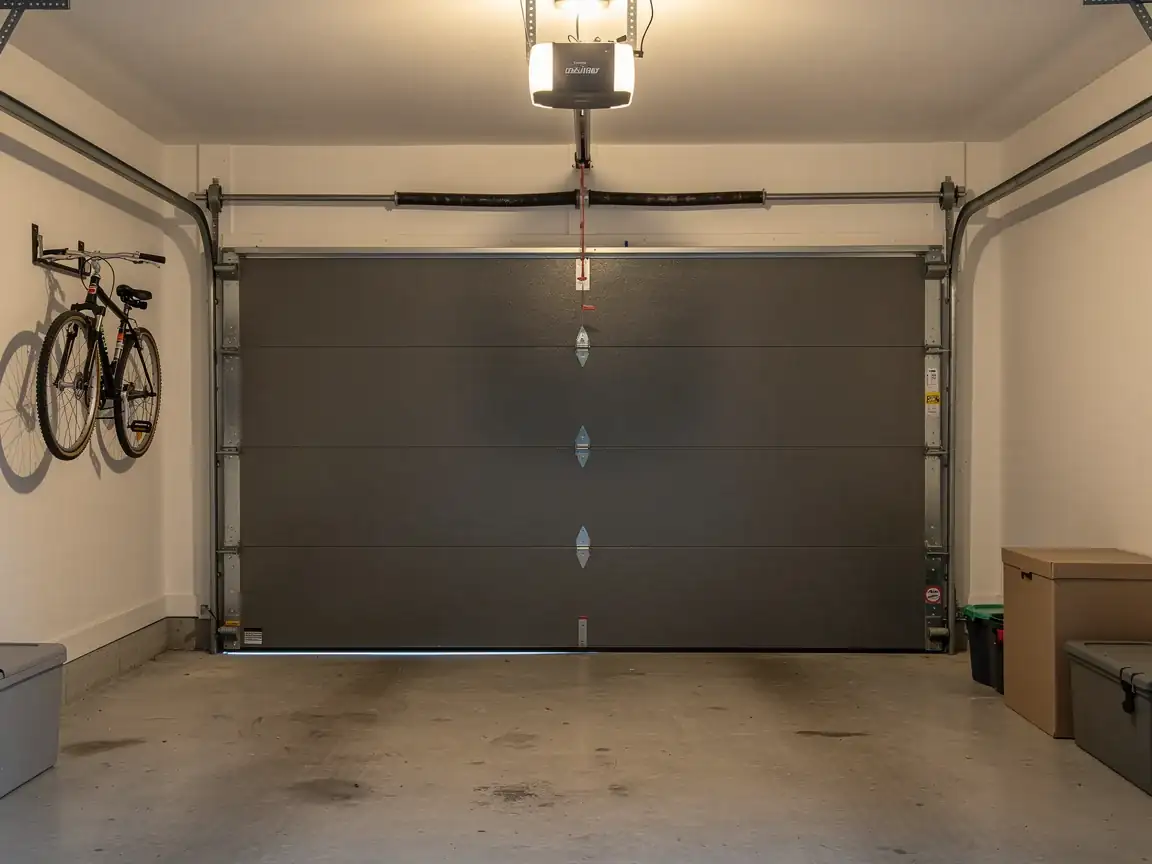
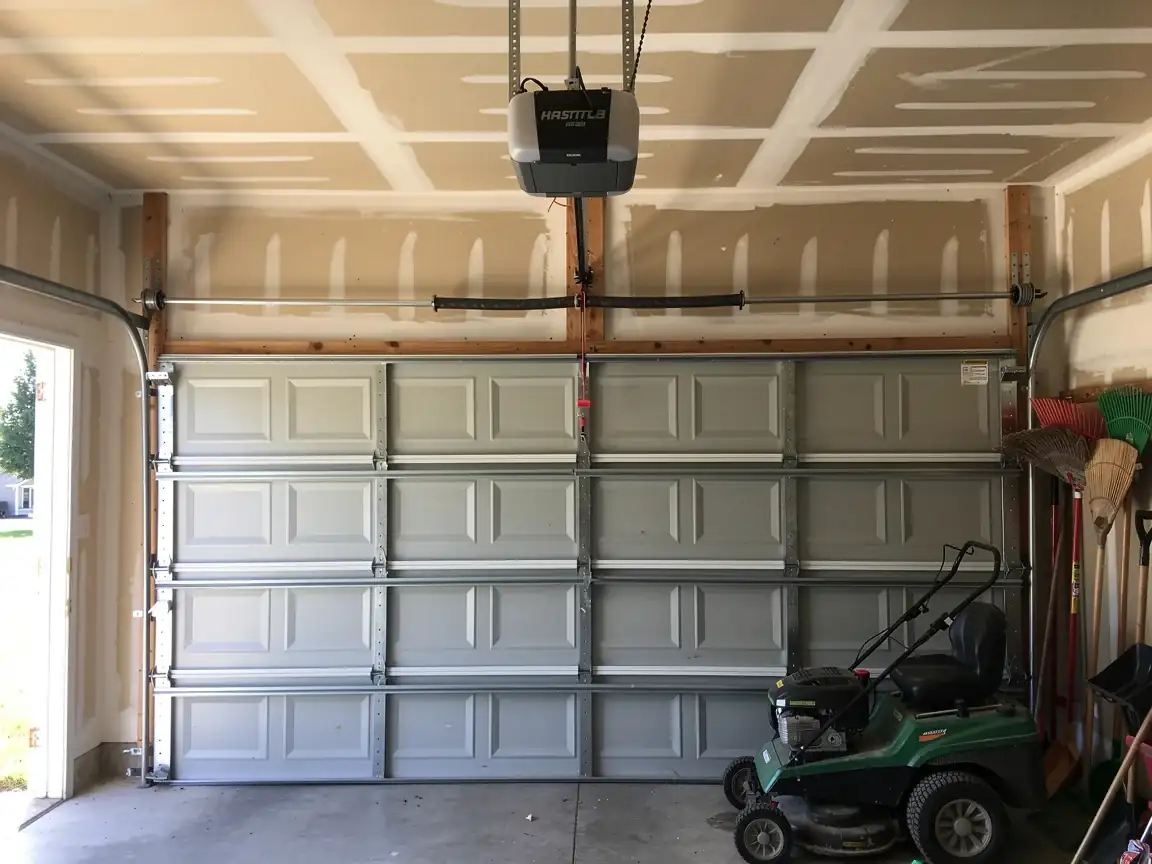
Most of the garage doors we work on in Queen Creek went up between 1990 and 2004. That's the median build year for this stretch of the valley, and it matters because torsion springs, rollers, and openers from that era are all hitting the end of their expected service life at roughly the same time. A spring wound in 1996 doesn't care that the house looks fine otherwise.
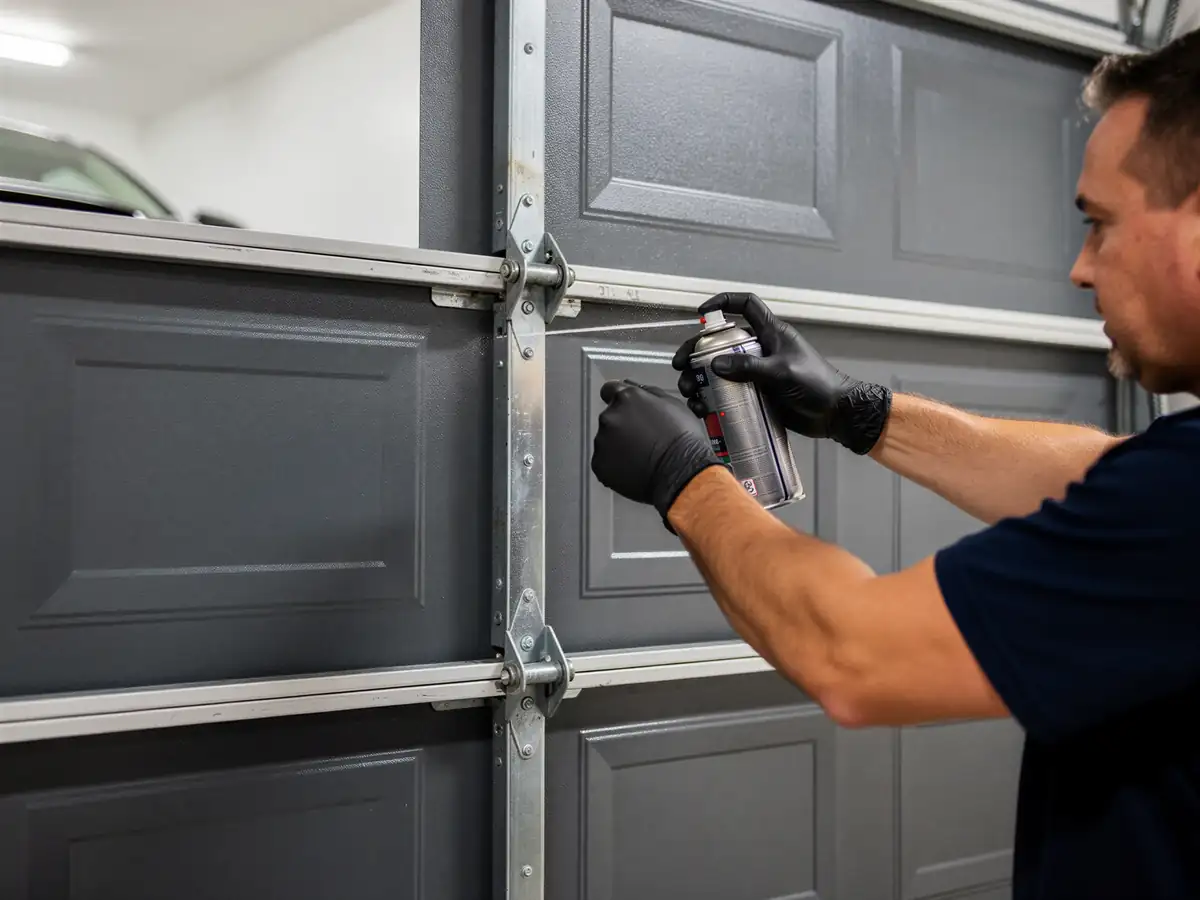
The second piece is heat. This area sits in a severe heat band, and that does specific damage a cooler climate never would. Steel rollers lose their lubrication faster. Nylon rollers and plastic idler bearings get brittle and crack. Opener circuit boards and logic boards, mounted against a hot garage ceiling, fail years before they would in a shaded or insulated space. Rubber weatherstripping dries, shrinks, and splits along the bottom panel.
Put those two together - a door built on a 1990s-era torsion system, baking through valley summers for two to three decades - and you get a predictable pattern: springs that snap without warning, rollers that grind and bind, and openers that start skipping or refusing to close. We see this pattern across the 1980s-90s pockets around Queen Creek, not as an exception but as the baseline.
The Symptom
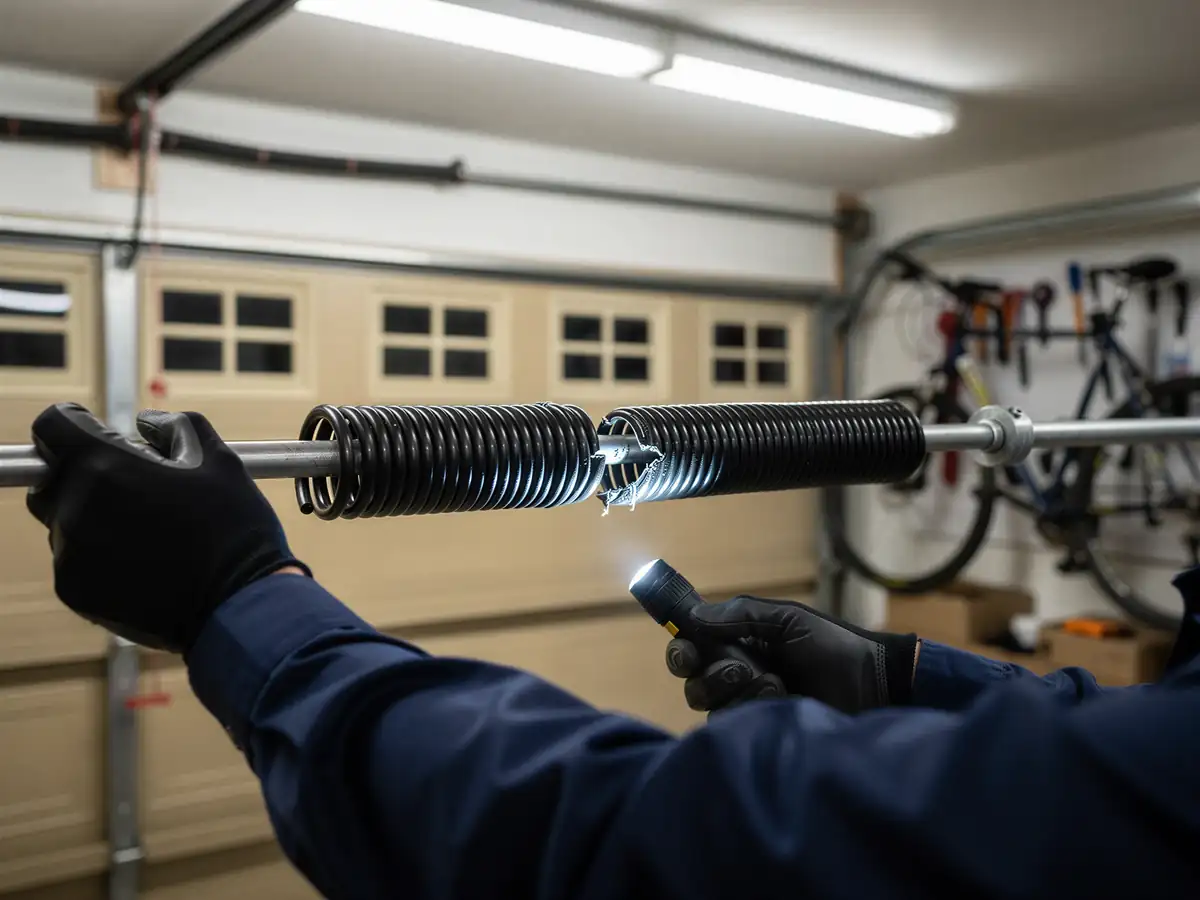
The most common call we get is a door that won't open
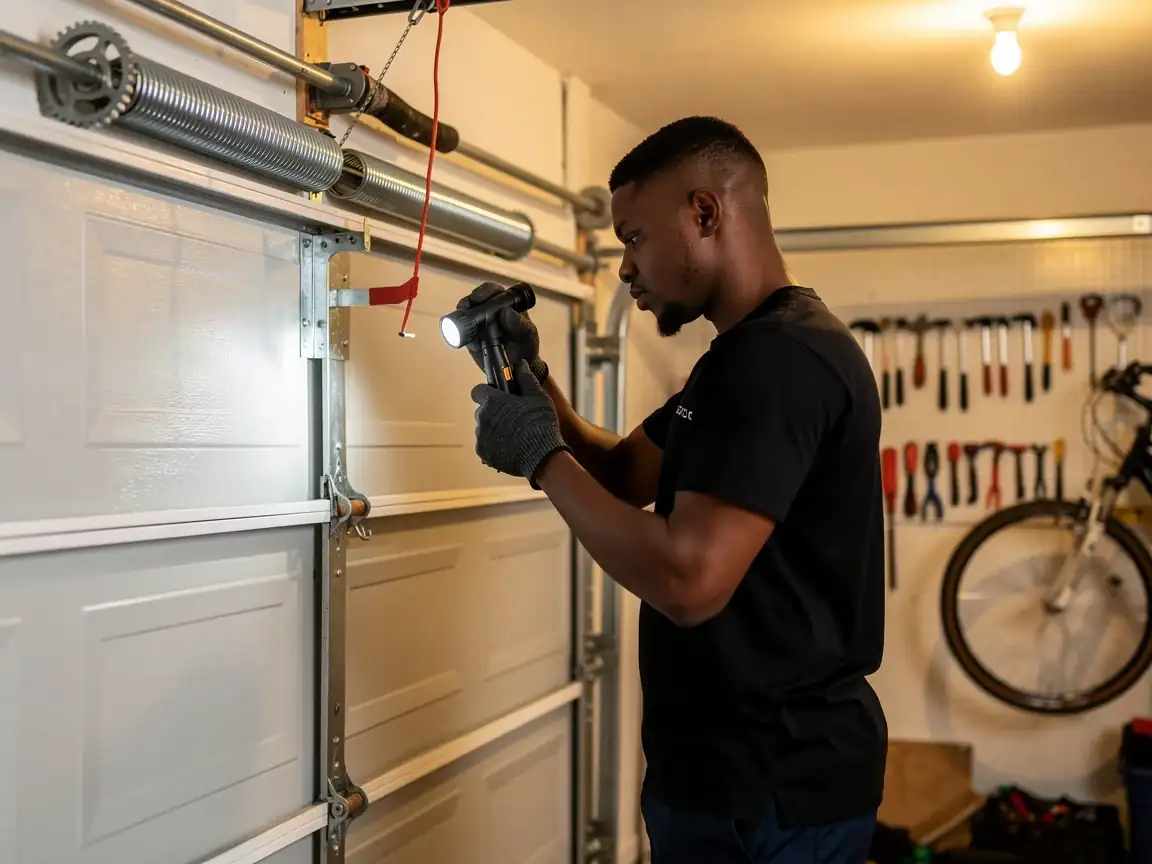
With a loud bang that happened sometime before - that's a torsion spring letting go. The second most common is a door that opens but shudders, squeals, or hangs up partway through the track, which usually means a roller has seized or cracked.
On the opener side, the symptom is often intermittent
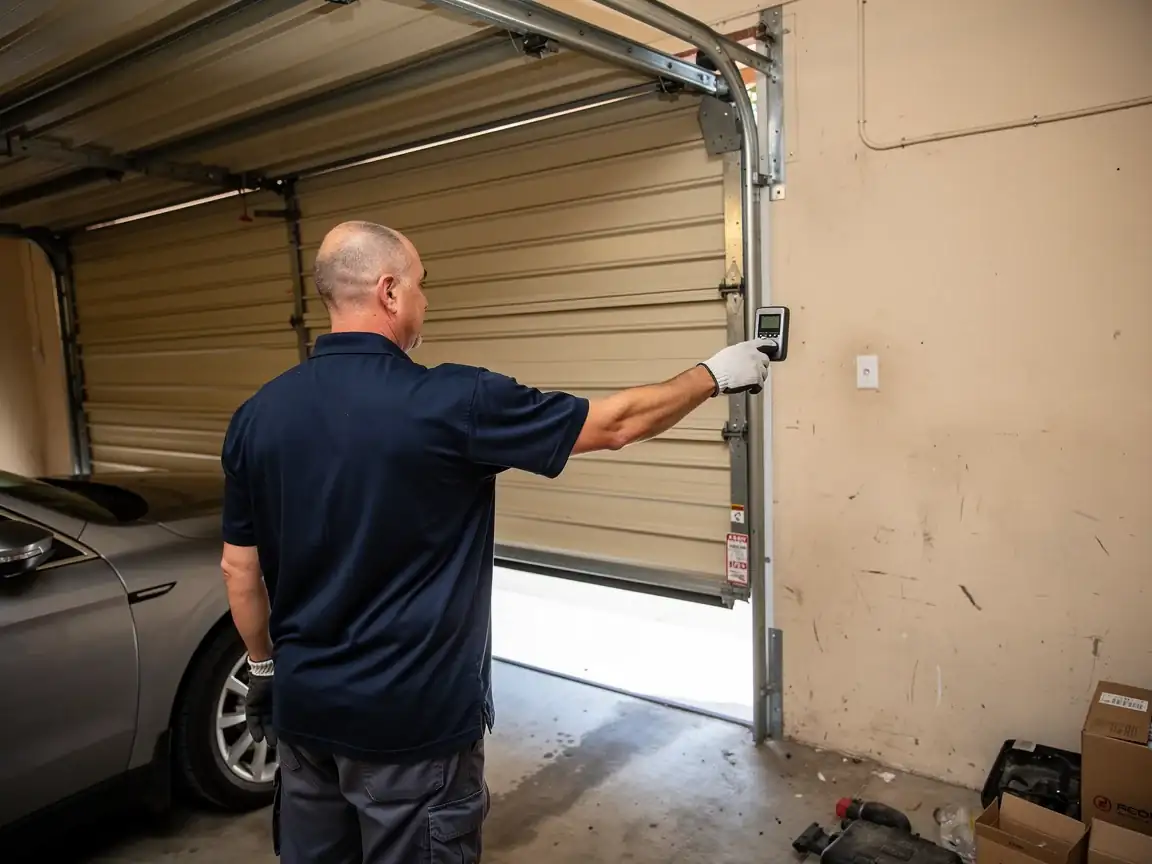
The door closes most days, then one afternoon it reverses halfway down, or the remote stops working until the unit cools overnight. That's a heat-stressed logic board or a worn limit switch, not a mystery electrical fault.
Weatherstripping failure shows up differently
As light coming in under the door, or dust and debris accumulating along the bottom edge, especially noticeable after a dust event blows through. None of these symptoms are dramatic on their own. The spring snap is the only one that happens all at once; everything else is a door quietly telling you a part is near the end of its run before it fails completely.
The Cost of This Job
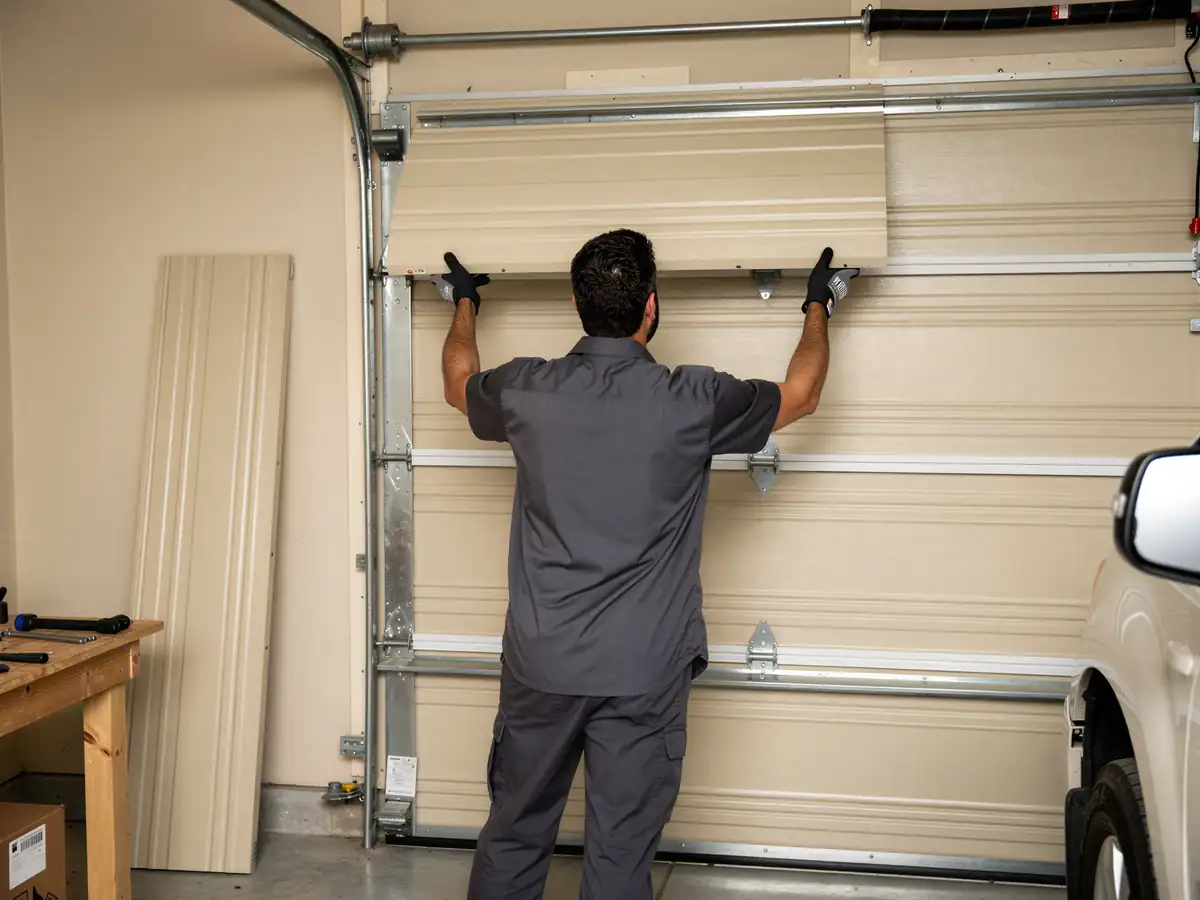
We don't quote a number here because the job varies too much to be honest about a flat price in writing - a single broken spring on a standard door is a different job than a seized roller system plus a failing opener board, and the two don't cost the same. What we can tell you is what drives the price: whether one spring failed or both, whether rollers need full replacement or just the worst few, and whether the opener itself needs a board or a full unit.
Given that most homes in this service area were built in the same fifteen-year window, we often find more than one of these failing together - a spring that's gone, paired with rollers that are close behind it from the same heat exposure. That's worth flagging on the phone before a truck rolls, because fixing one and ignoring the other means a second call a few months later. We'll always tell you straight whether a repair is worth doing or whether the door's age means replacement is the better use of your money.
What Is on the Truck
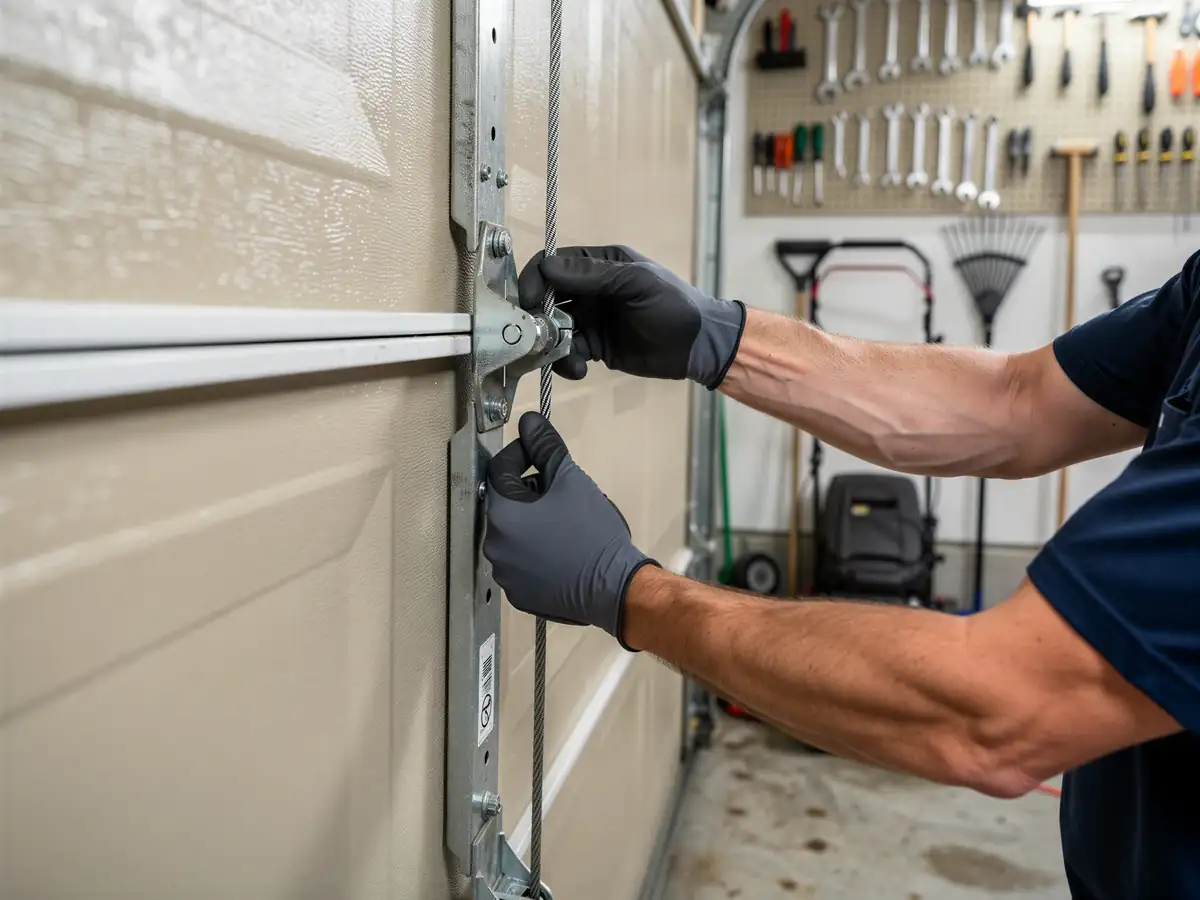
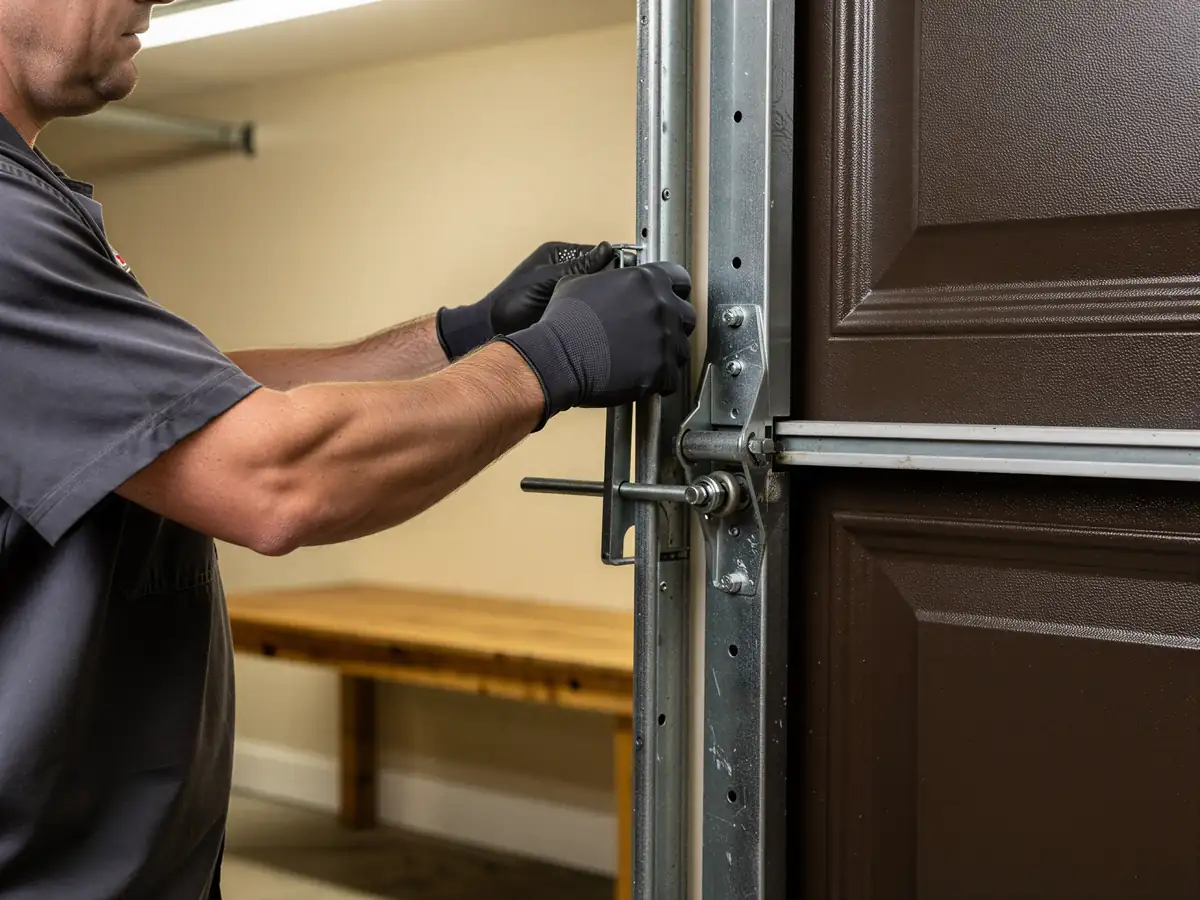
For the failure pattern common here, the truck carries torsion springs sized for standard steel sectional doors, steel and nylon rollers, and the sealed bearing plates that wear out alongside them. We also stock the opener parts that fail most from heat exposure - logic boards and limit switch assemblies for the common residential opener brands - and bottom-panel weatherstripping in standard track widths.
What's not always on the truck is anything unusual: a custom panel size, a discontinued opener model, or hardware for a door style outside the standard sectional steel doors that make up most of the housing stock here. For those, parts can mean a short wait while we order the right piece rather than force a mismatch that fails again in a year. That's the one honest limit on same-day work - we'd rather tell you upfront than hand back a door that's wrong in six months.
We work across Queen Creek and the surrounding area, including homes toward and out as far as Gold Canyon, Sun Lakes, Florence, and Sacaton.