Can You Do This Yourself
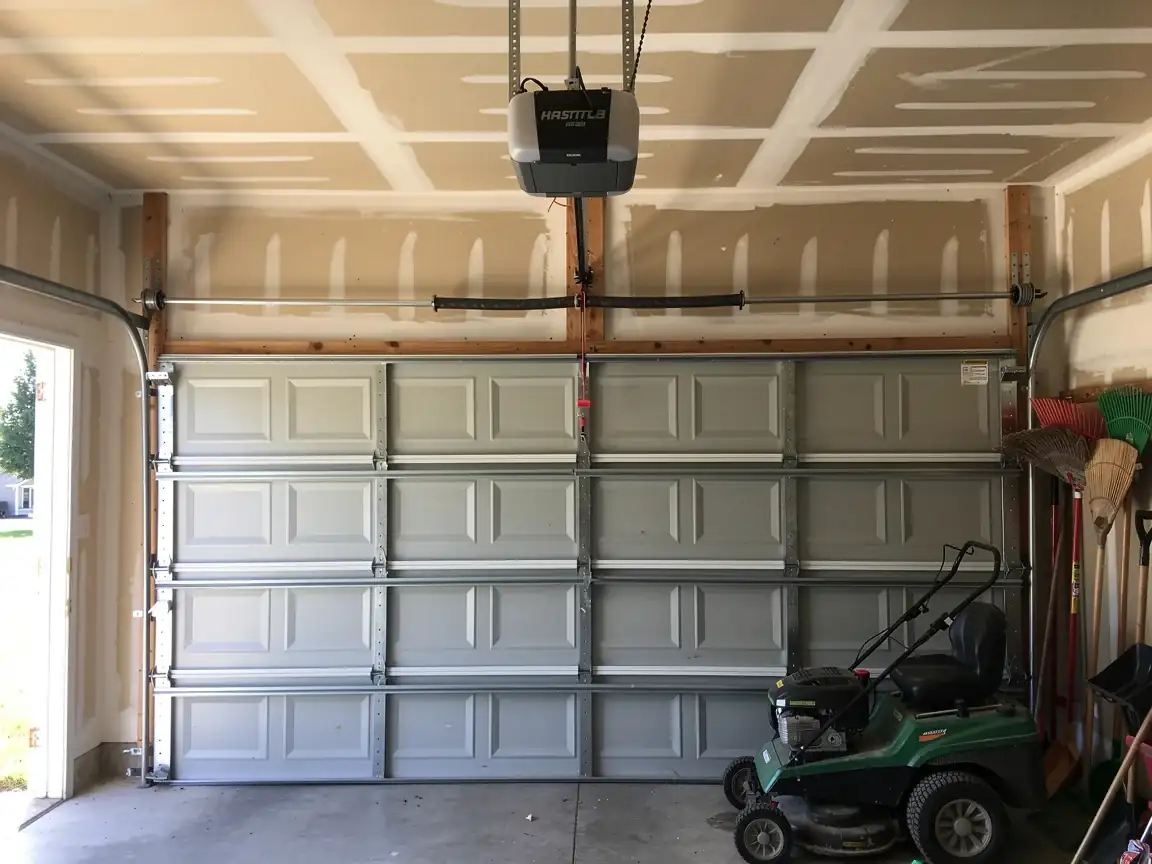
A garage door cable is under real tension even when the door looks still. On a door built around 1993 - which describes most of what's standing in Sacaton - that cable has likely never been swapped, and the drum it winds onto may be the original stamped-steel piece from the same install. That's thirty-plus years of UV, dust, and heat cycling on one wire rope.
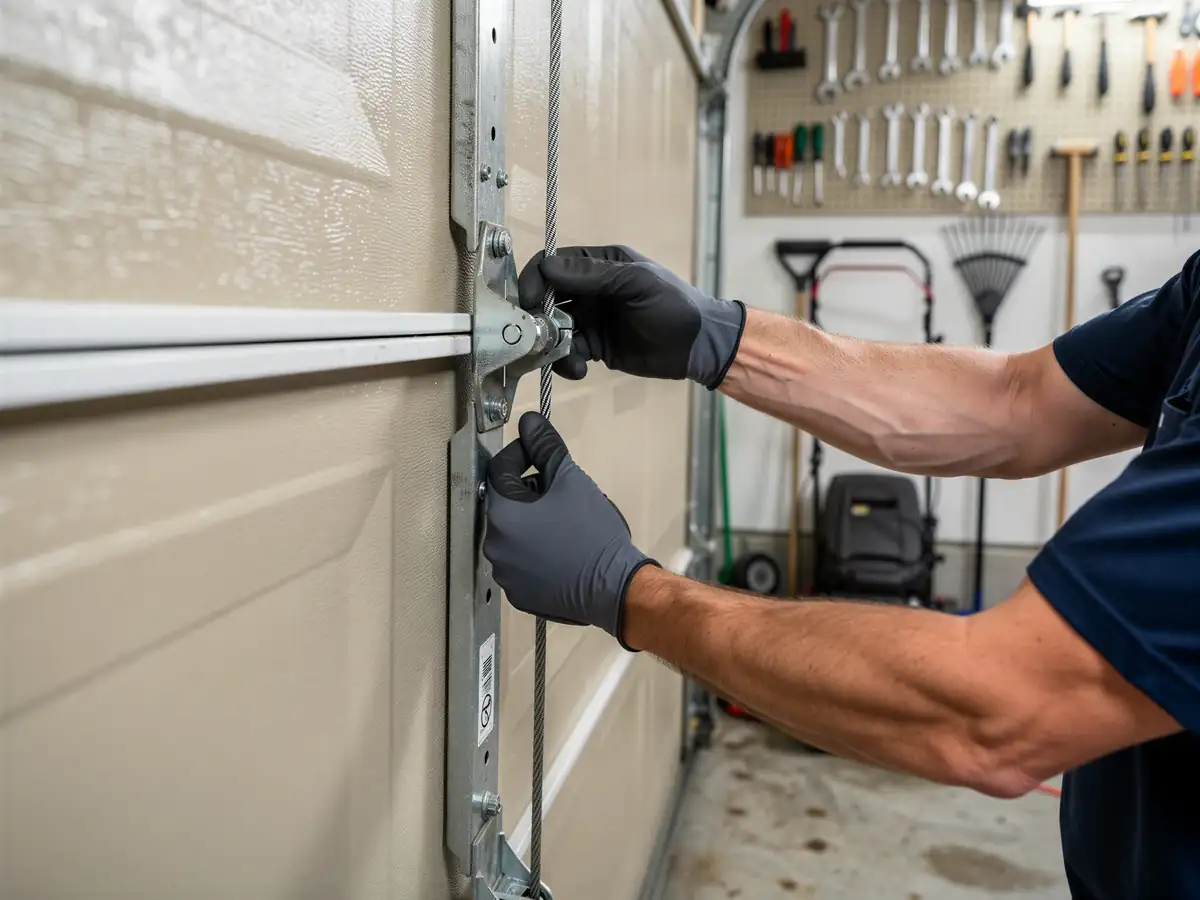
Don't try to loosen or remove a cable while the spring is still wound. If the door is stuck halfway or one side hangs lower than the other, that's a cable problem, not an alignment problem, and the fix means releasing stored tension safely first. We're not going to pretend this is a five-minute DIY job - it isn't, and a slipped winding cone has put people in the ER. If you've got basic tools and want to inspect the cable for fraying or rust at the bottom roller, that's reasonable. Replacing it yourself with the spring loaded is not something we'd recommend, and we won't walk you through that part over the phone.
What the Fix Involves
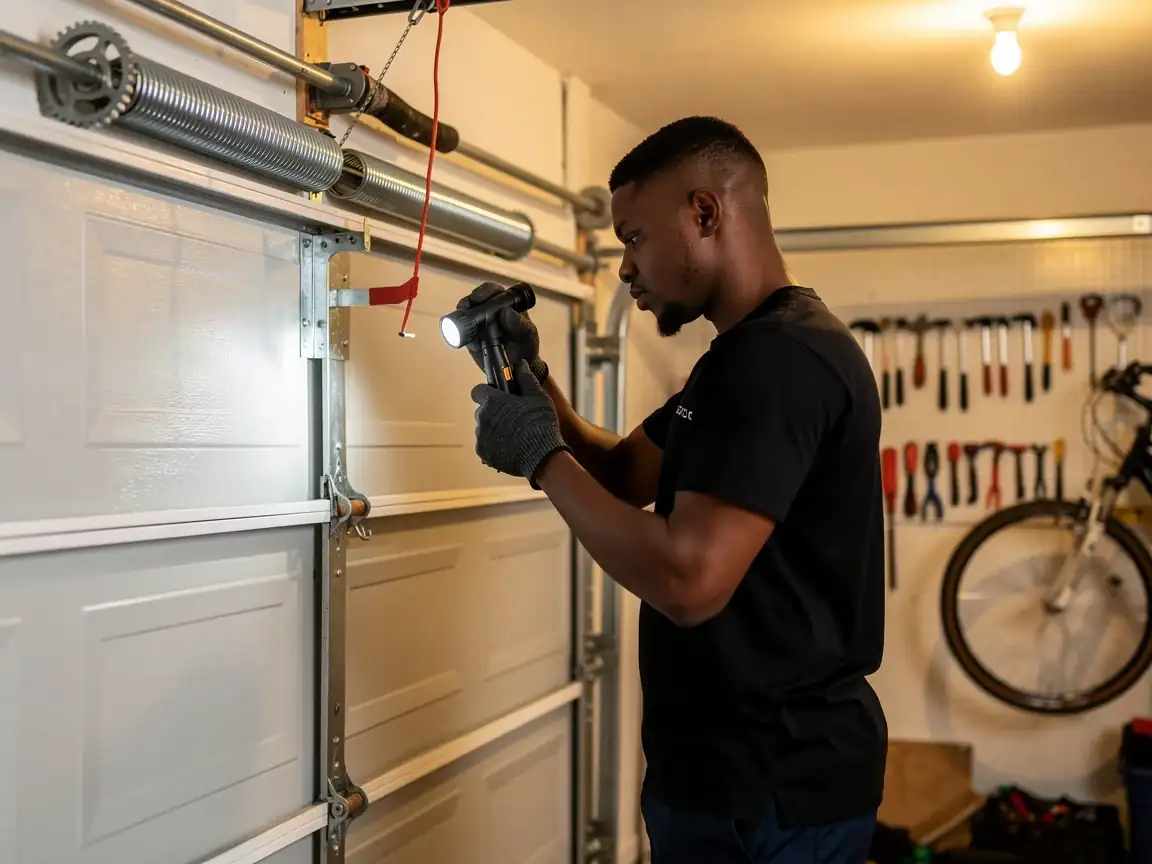
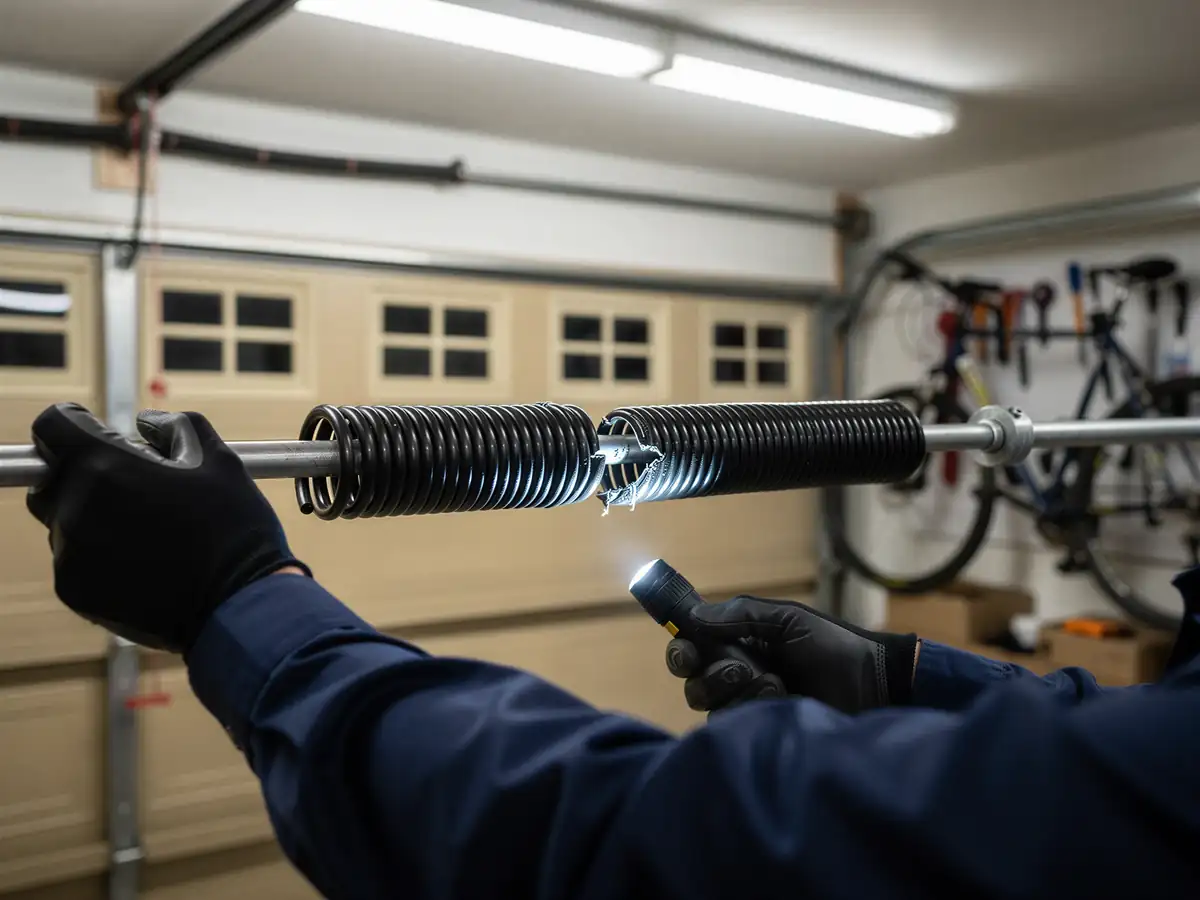
We unwind the torsion spring with winding bars, clamp the shaft
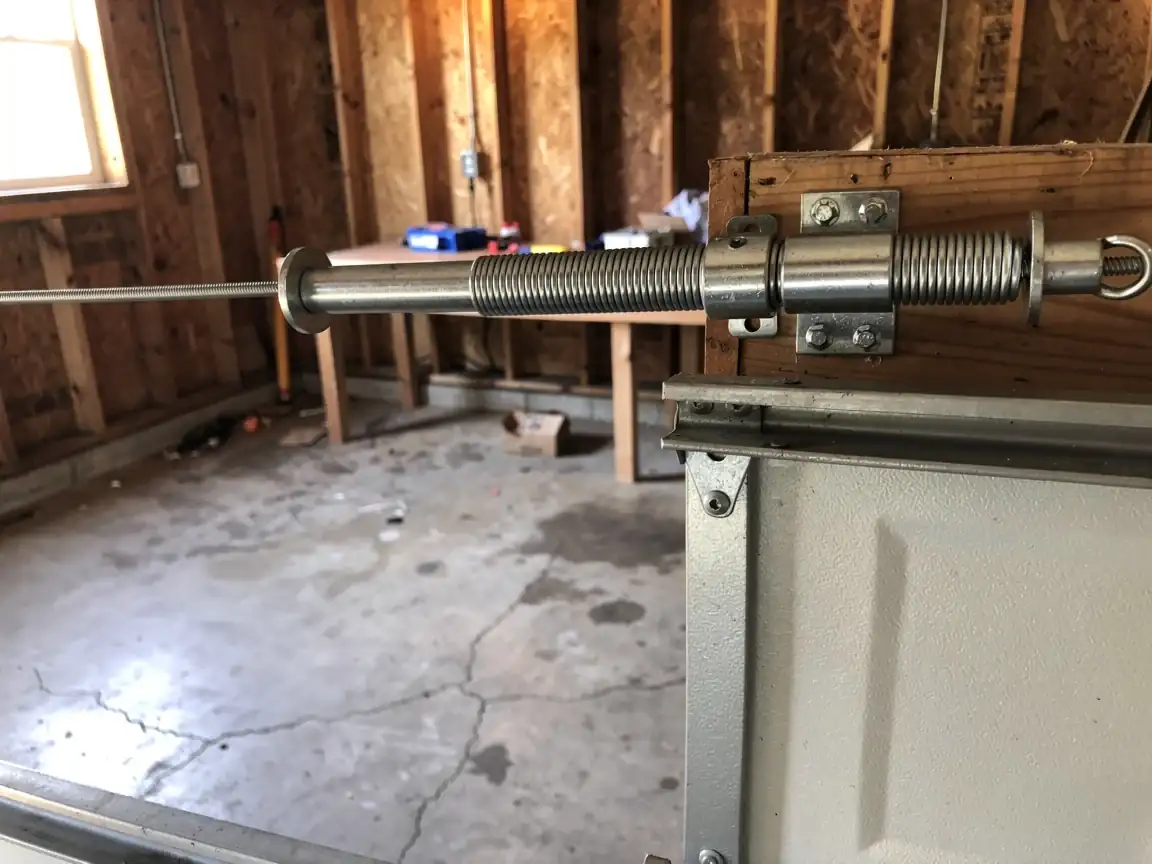
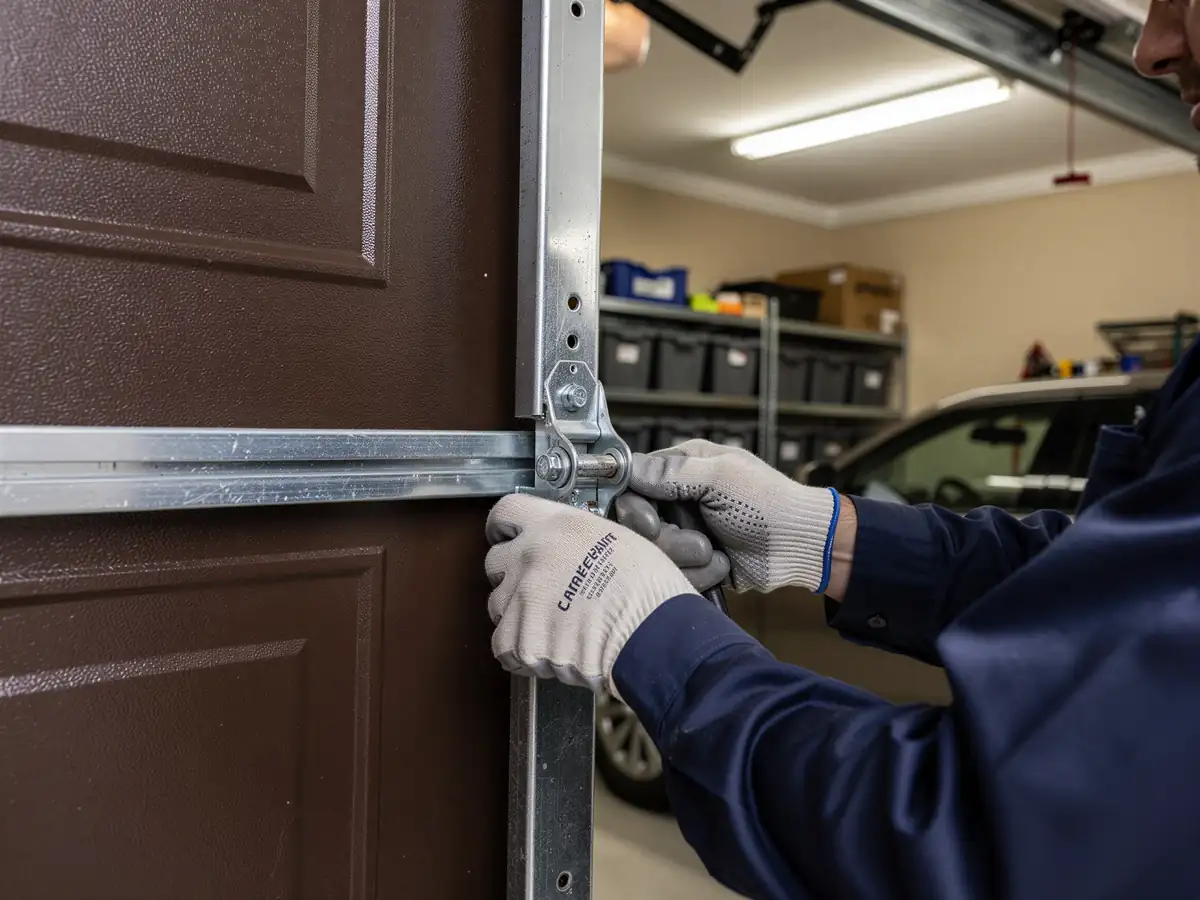
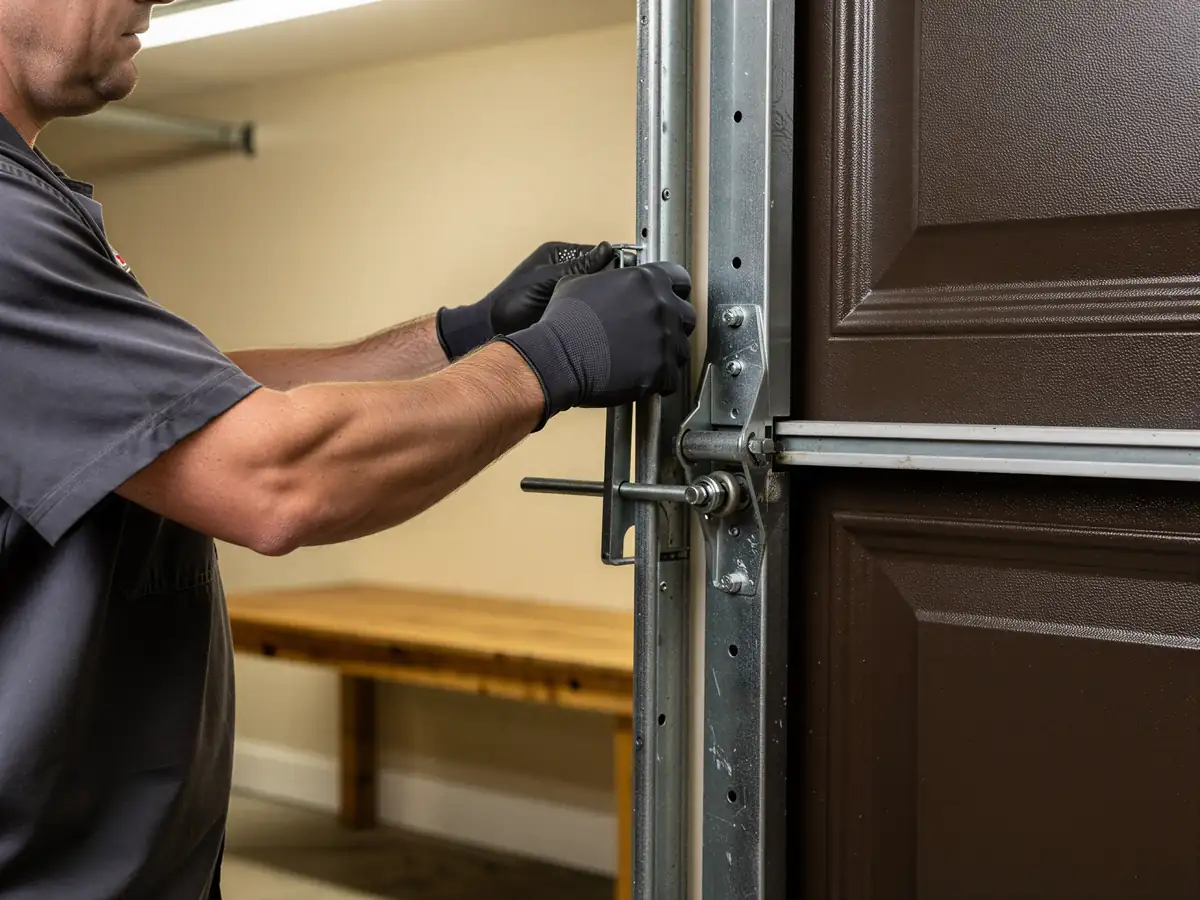
Then pull the old cable off the drum. On a door from the early-90s building wave that covers most of this area, the drum itself is often original too - we check it for wear grooves before reusing it, because a grooved drum will chew through a brand-new cable in a season. Same goes for the bottom bracket the cable anchors to; after this many years in Arizona heat, the fasteners are frequently seized and need to come out with a breaker bar rather than a wrench.
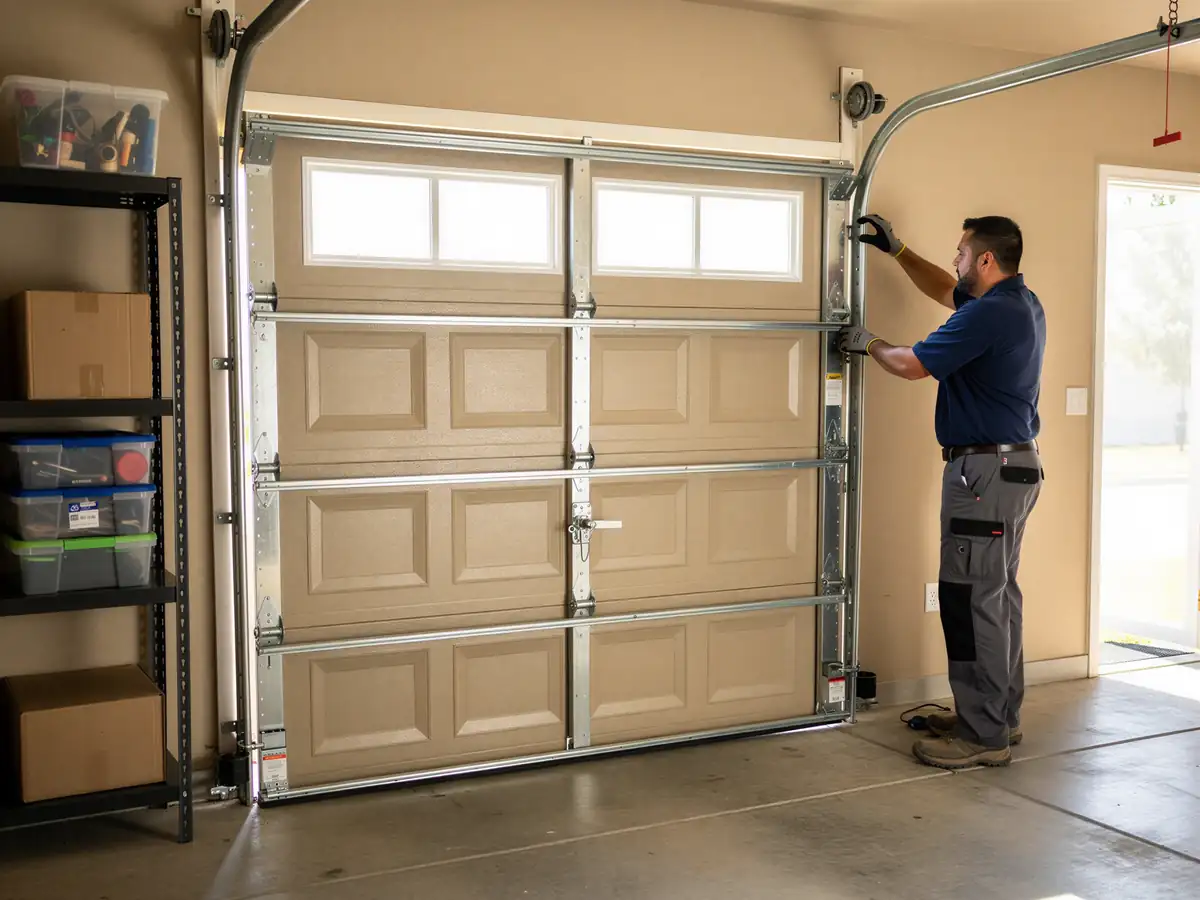
We run new galvanized cable sized to the door's weight and drum diameter, re-tension the spring, and cycle the door a dozen times checking for even travel on both sides
If the opposite cable is anywhere close to the same age, we'll flag it - cables on a two-car door tend to fail in pairs within a season or two of each other, and driving back out for the second one isn't worth your time or ours.
The Symptom
The giveaway is almost always one corner of the door dropping while the rest stays level, or the door jamming a few inches off the floor with a loud bang as the cable jumps the drum. Sometimes it's a frayed strand catching on the bottom bracket, which you'll hear as a scraping tick every time the door cycles.
The heat here is the accelerant. This region sits in a severe-heat climate band, and repeated expansion and contraction on a galvanized cable that's original to a 1993-built house is exactly the kind of slow fatigue that ends in a sudden snap - usually not at a convenient time. If your door is original to the house and you've never had the cables touched, don't wait for a full failure; a door that drops suddenly on one side can bind the opener motor or crack a panel.
How Long It Takes
Sacaton sits about 14 miles from our Queen Creek shop, so figure that drive into your day along with the repair itself. Cable replacement on one door, once we're on site, usually runs under two hours including the re-tension and test cycles - longer if the drum or bottom bracket also needs replacing, which is common enough on hardware this age that we always check before we quote the job as