Can You Do This Yourself
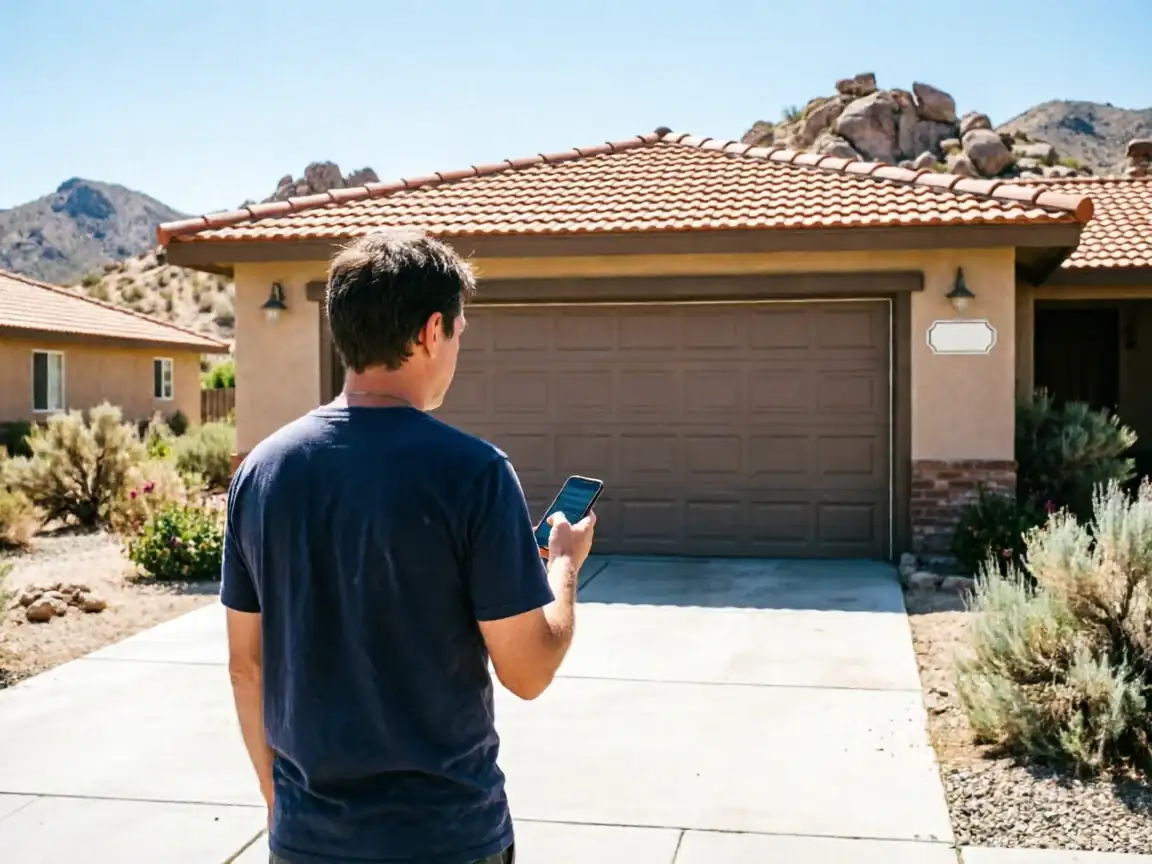
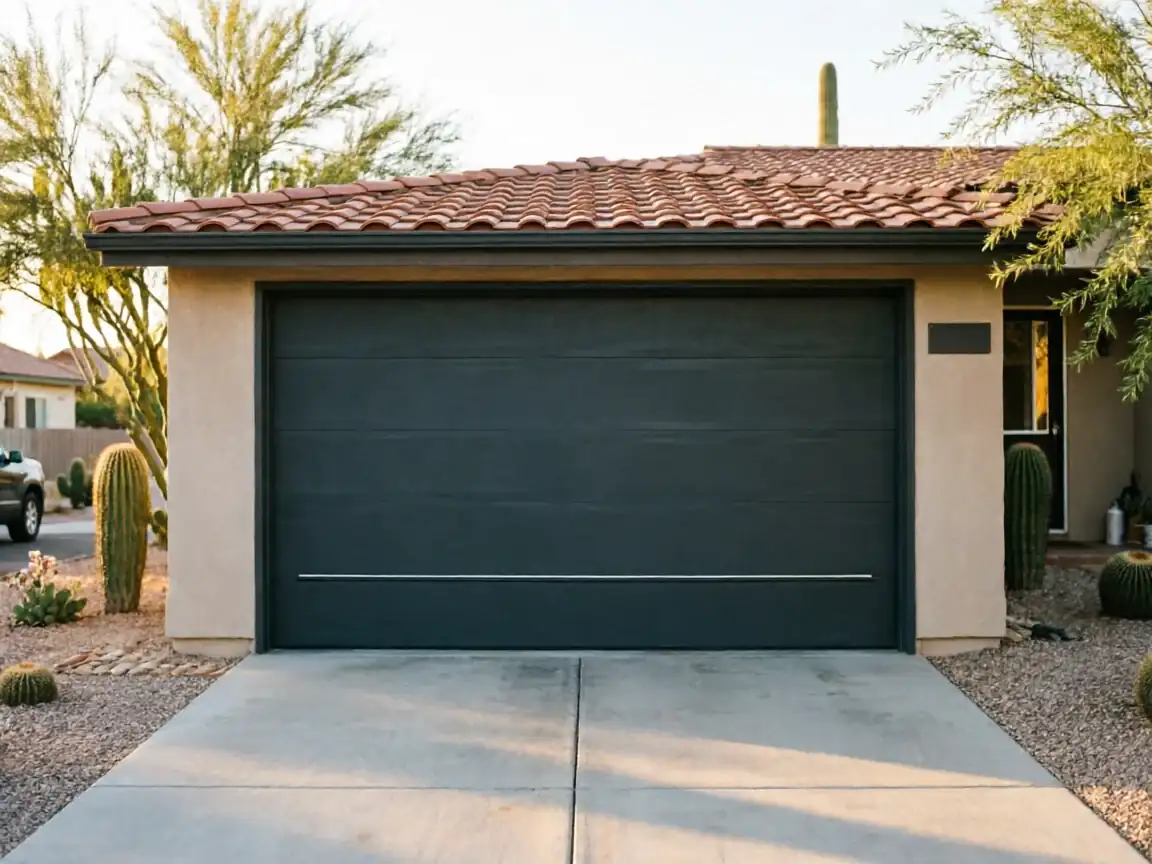
Sacaton is a small place, about 706 households by the last count, which means panel damage here doesn't show up often enough for most owners to have seen it twice. That's the real reason to think twice before pulling a damaged panel yourself: you won't have a second one in the garage to compare fit against, and on a door built to 1990s sizing, a panel from a newer line won't bolt up clean.
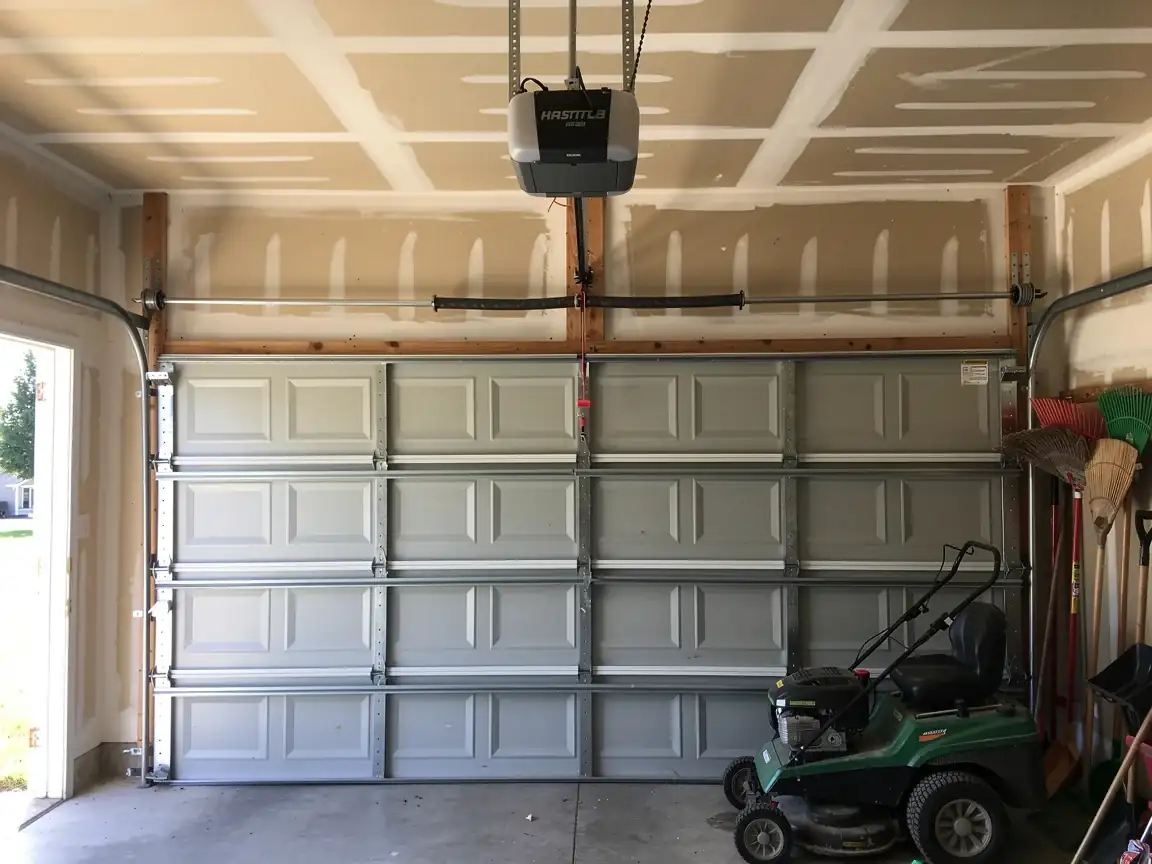
If the damage is cosmetic - a dent from a mirror or a cart, no cracking, no warping along the seam - you can sometimes unbolt a single section and swap it without touching the rest of the door. The risk is the fasteners. On doors from this era the panel bolts are often rusted or stripped from heat cycling, and stripping one more while you're working alone means the section above it can drop.
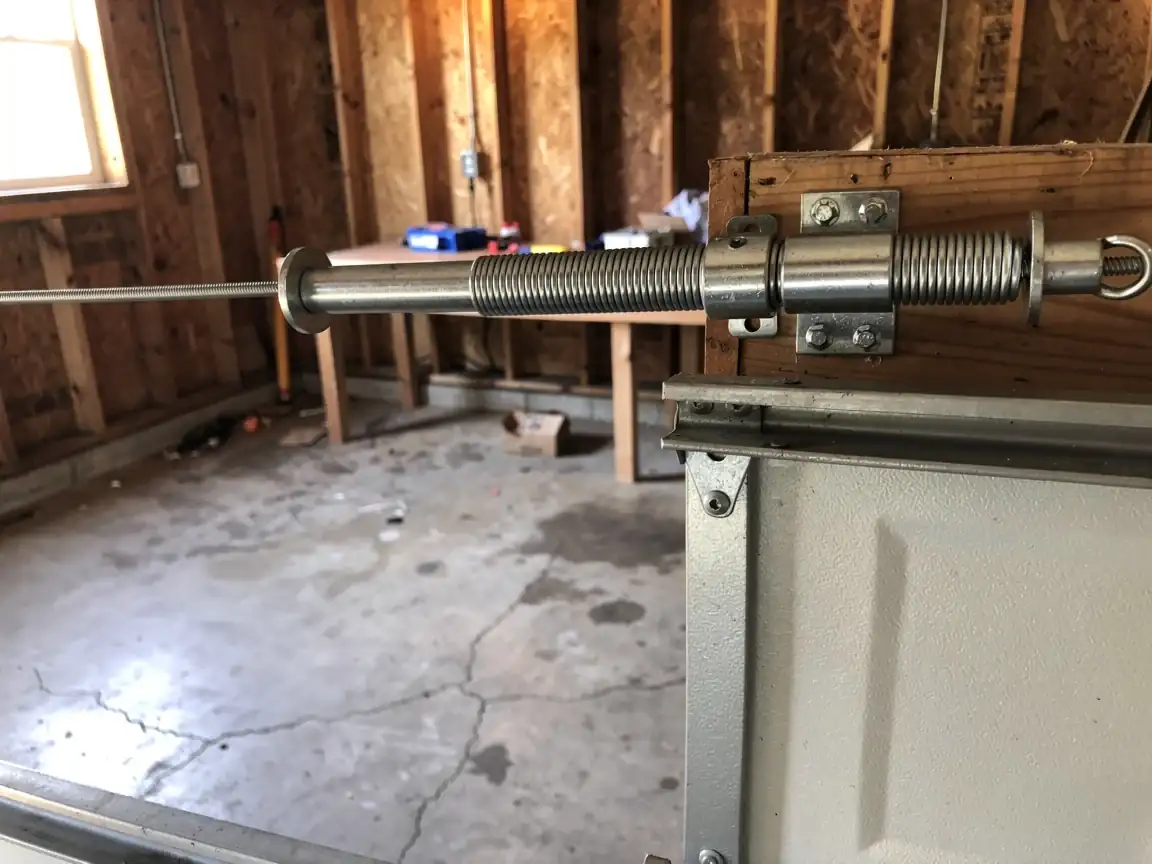
We'd rather tell you that than have you call us after. If you're not sure the section is isolated - if the track looks bent or a hinge is pulled loose - that's not a one-panel job anymore, and that's worth a call before you start unbolting anything.
What the Fix Involves
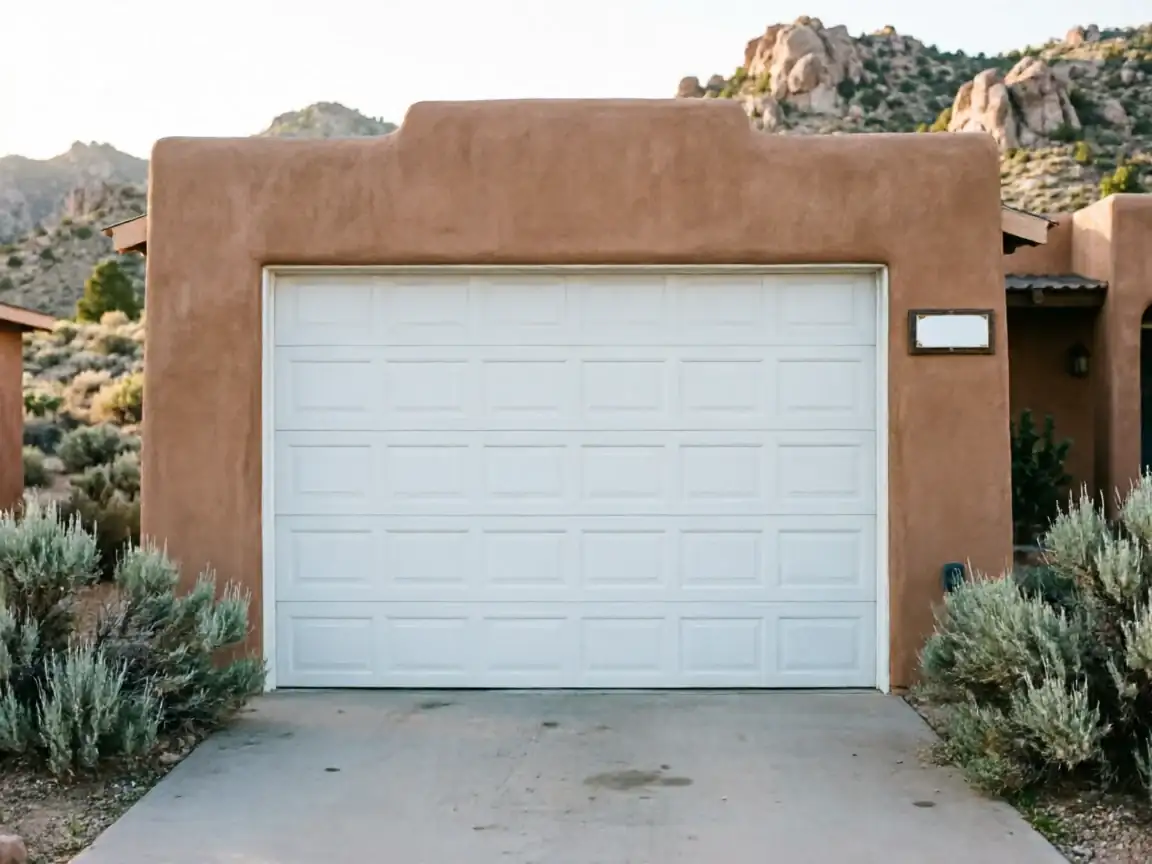
Most of the door stock we see out this way dates to the early-to-mid 1990s
In line with the 1993 median build year for this part of the service area, and falls into the broader 1980s-90s pattern that shows up across this stretch. That generation of door used panel profiles and hinge spacing that newer steel lines don't match exactly, so the first part of the job is identifying the actual panel width and rib pattern before we order anything.
Once we have the right match, the swap itself is straightforward
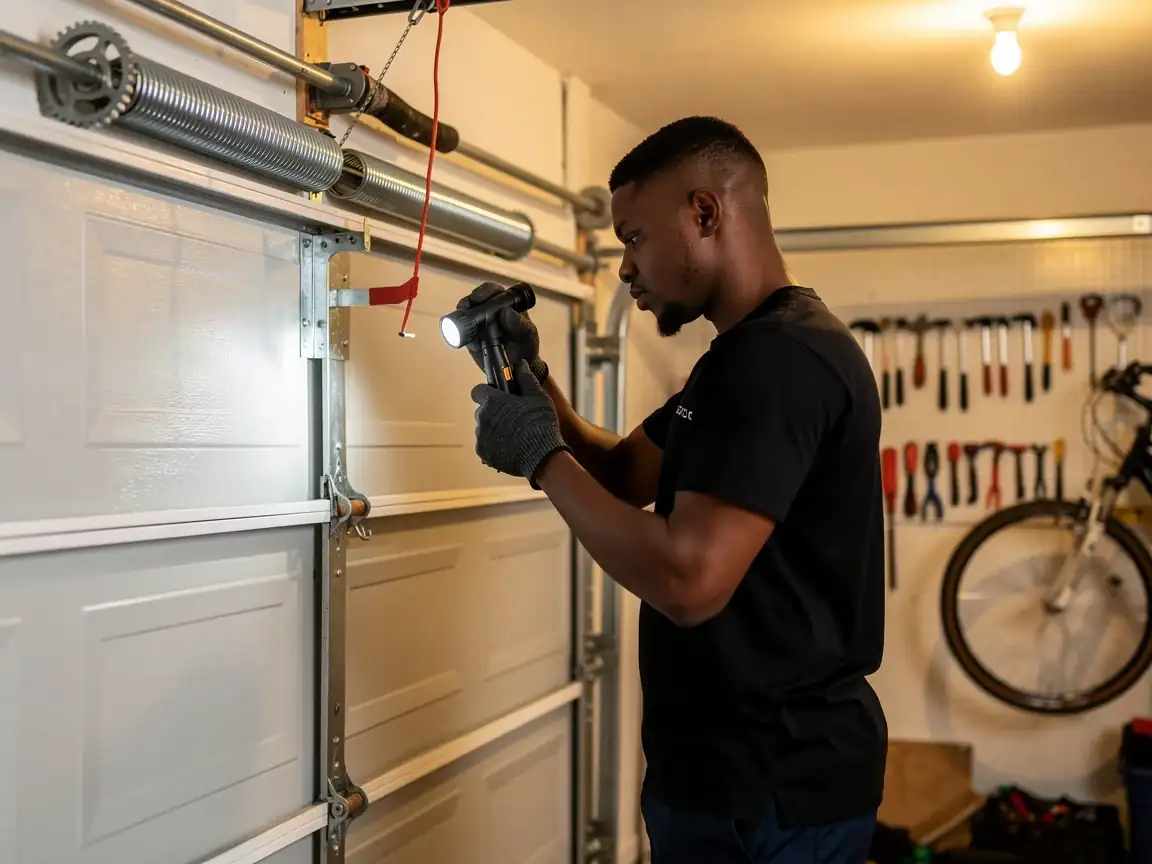
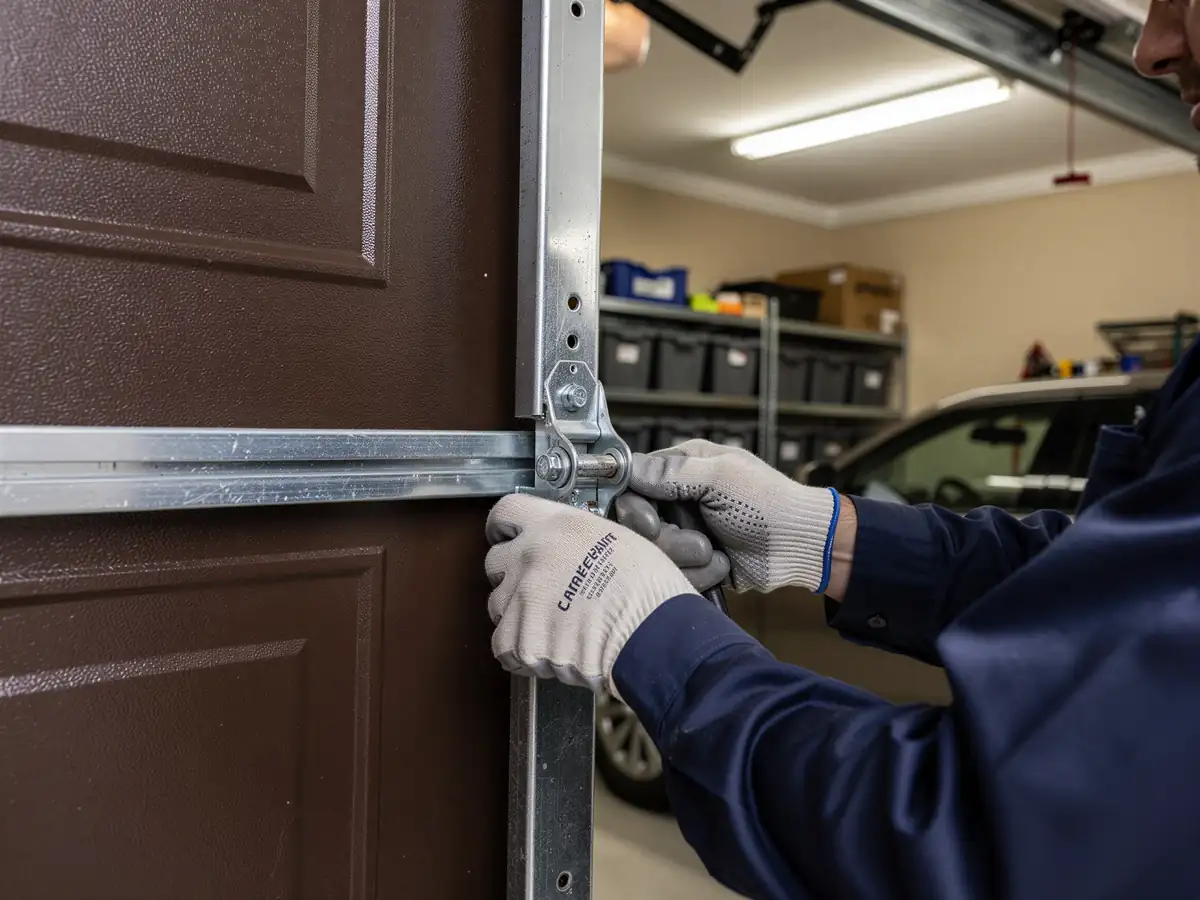
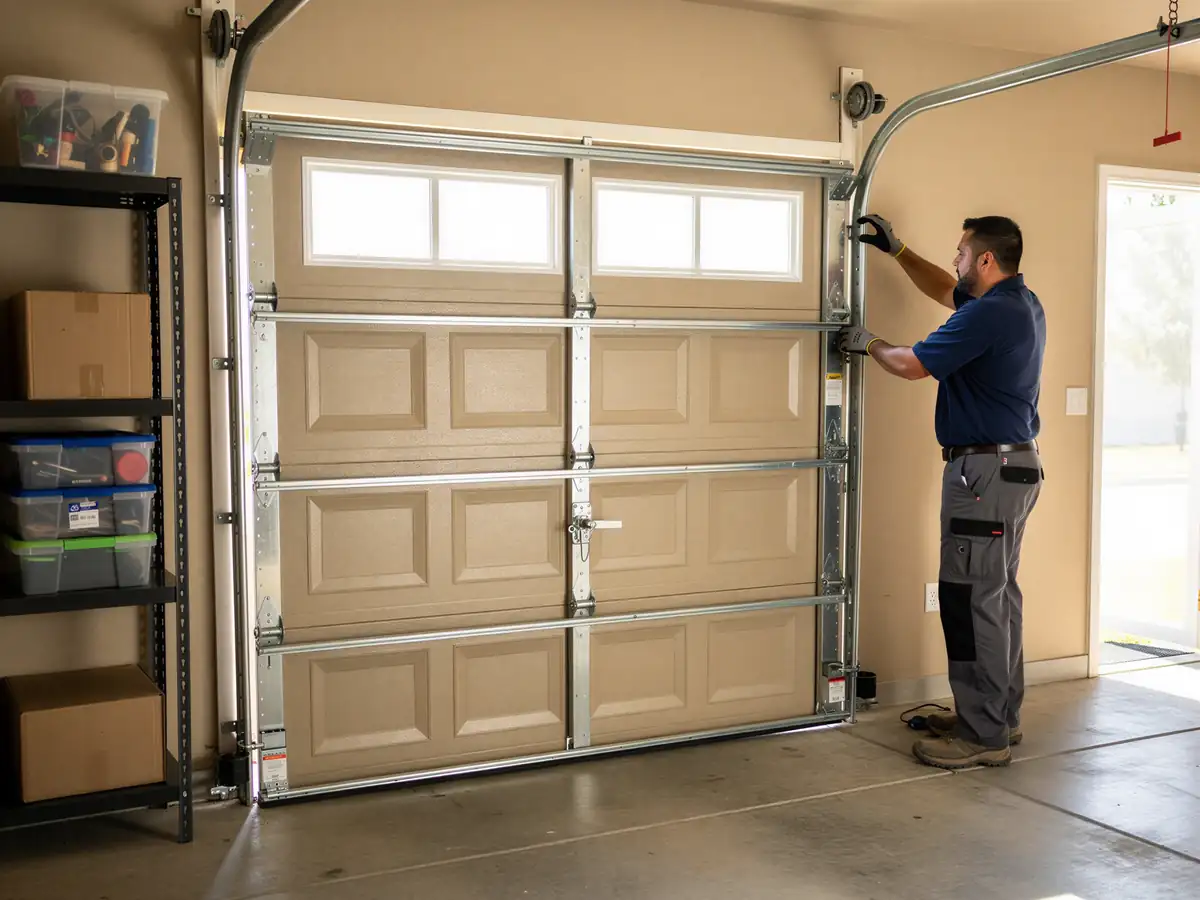
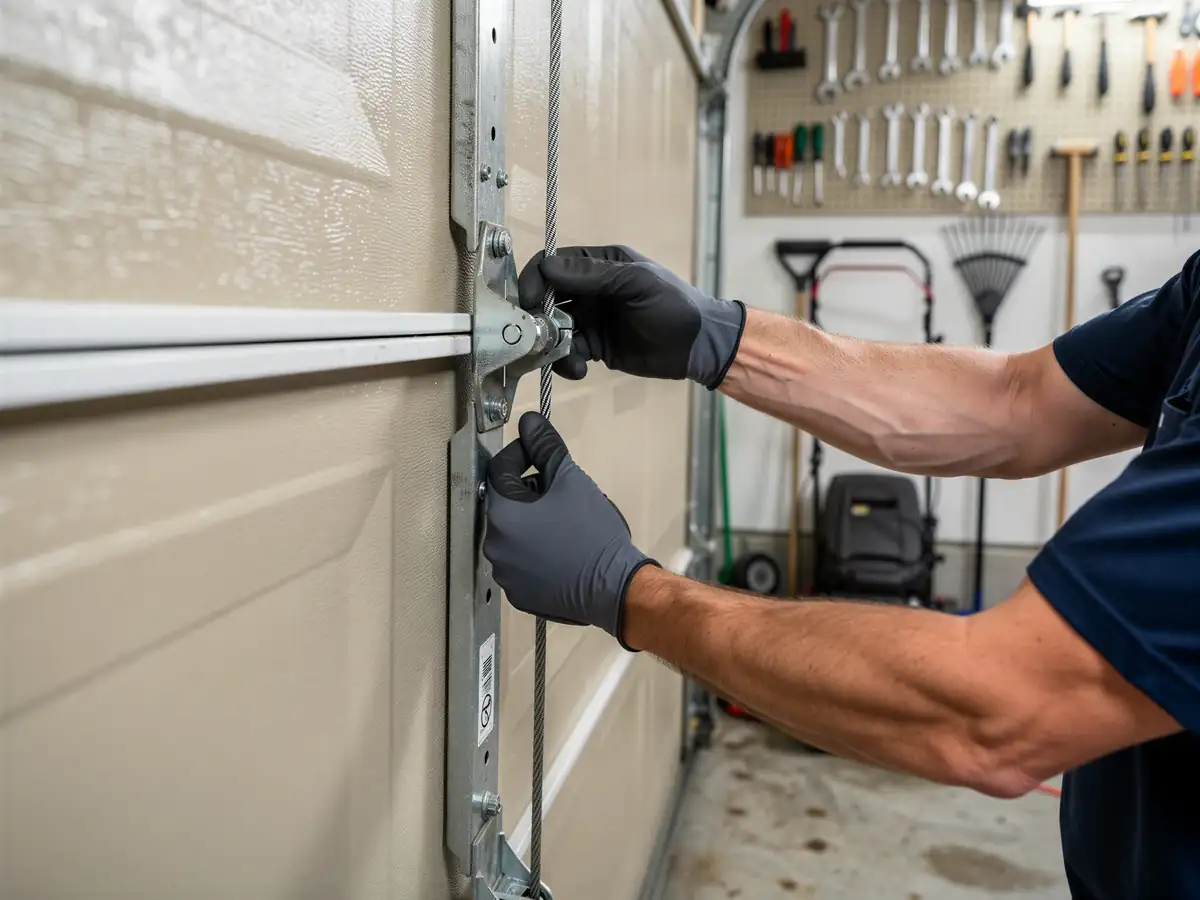
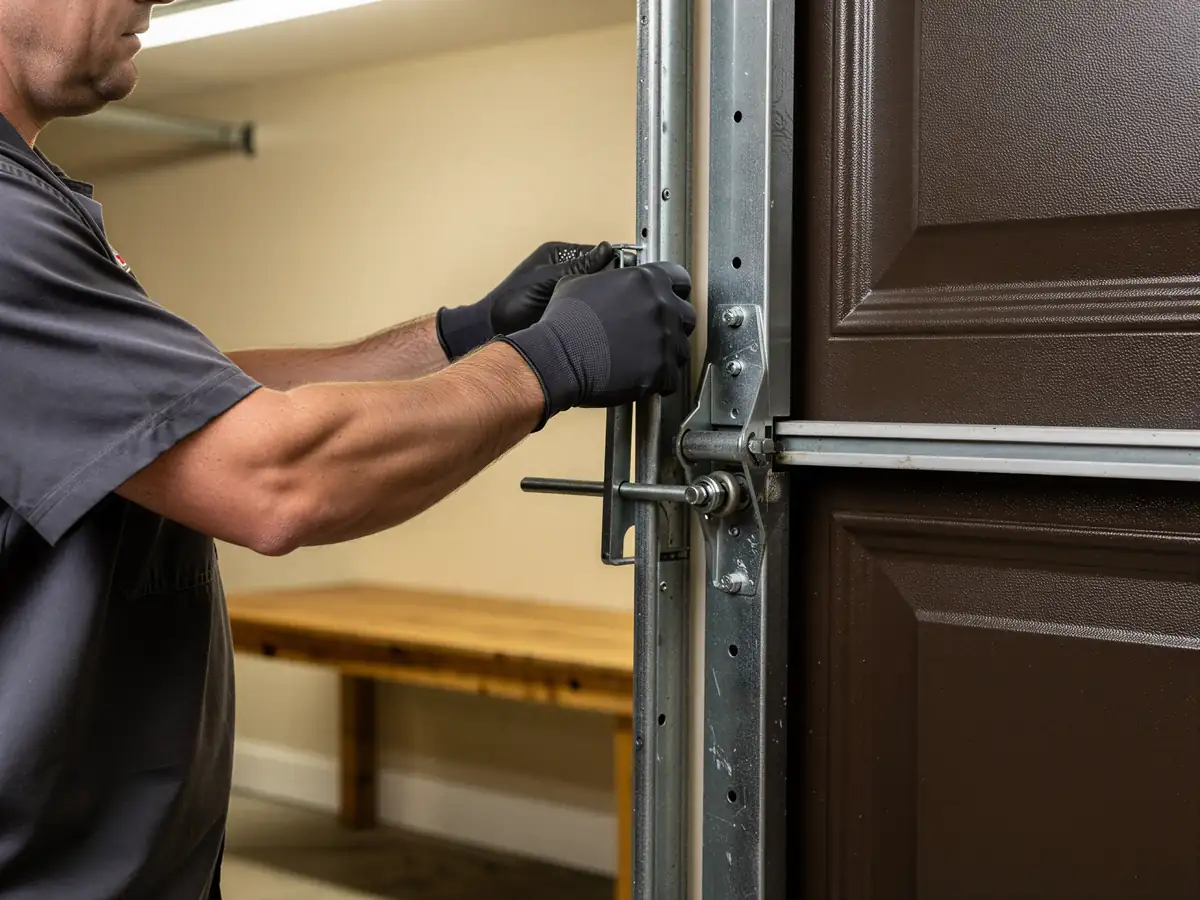
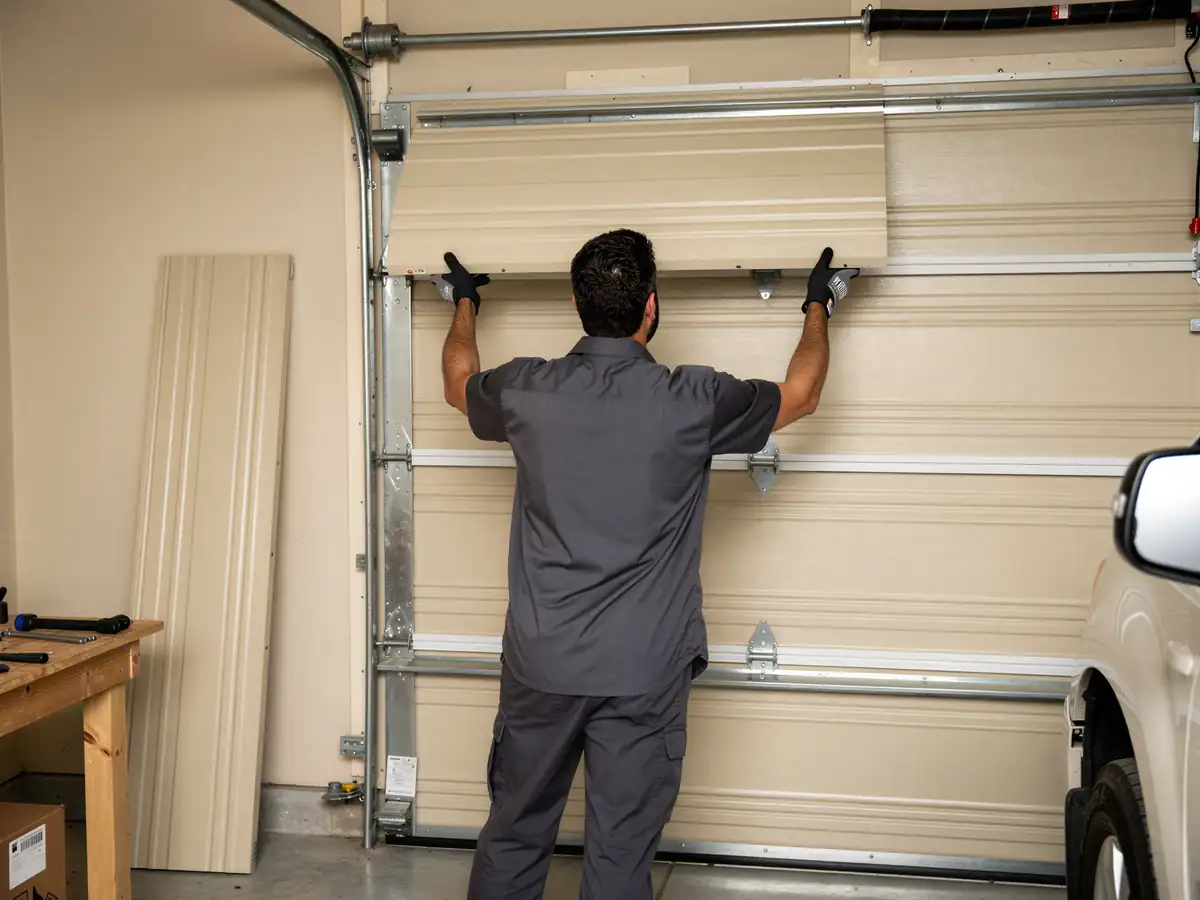
Unbolt the hinges at the damaged section, slide it free of the track rollers, set the replacement, and re-torque the hardware. We check the adjoining panels and the end hinges while we're in there, because a panel that's been hit hard enough to replace has often knocked a roller or bent a hinge arm that won't show until the door's run a few cycles.
Here's the honest limit: we don't carry every panel color or finish on the truck
If your door's original run is discontinued or faded from years of sun, we may need to order a close match and come back for installation, rather than finish in one visit.
The Symptom
The most common call out here isn't a dent at all - it's a panel that's bowed or bellied outward, usually on the bottom or second section. In a climate with the kind of sustained severe heat this area gets, steel panels expand and contract daily, and a section that's already been stressed by an impact starts to separate at the seam or pull away from its stiffening rib faster than it would in a milder climate.
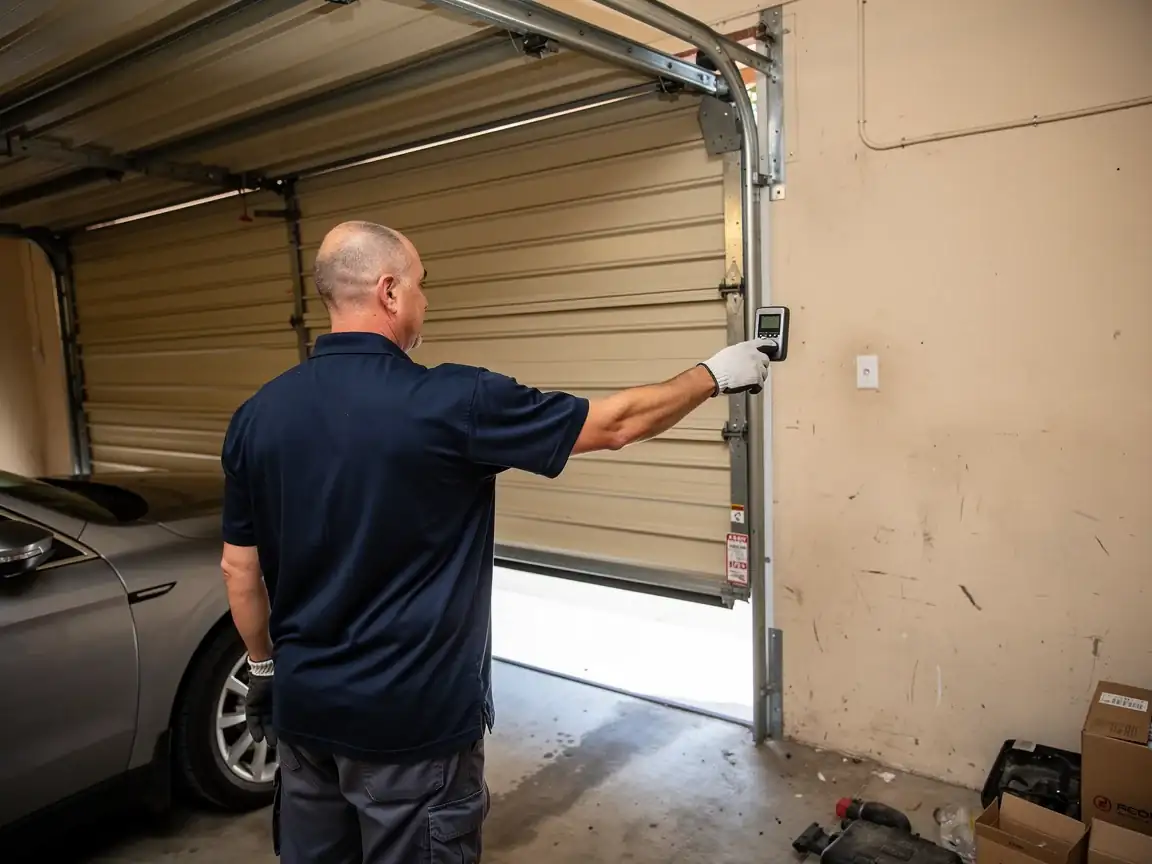
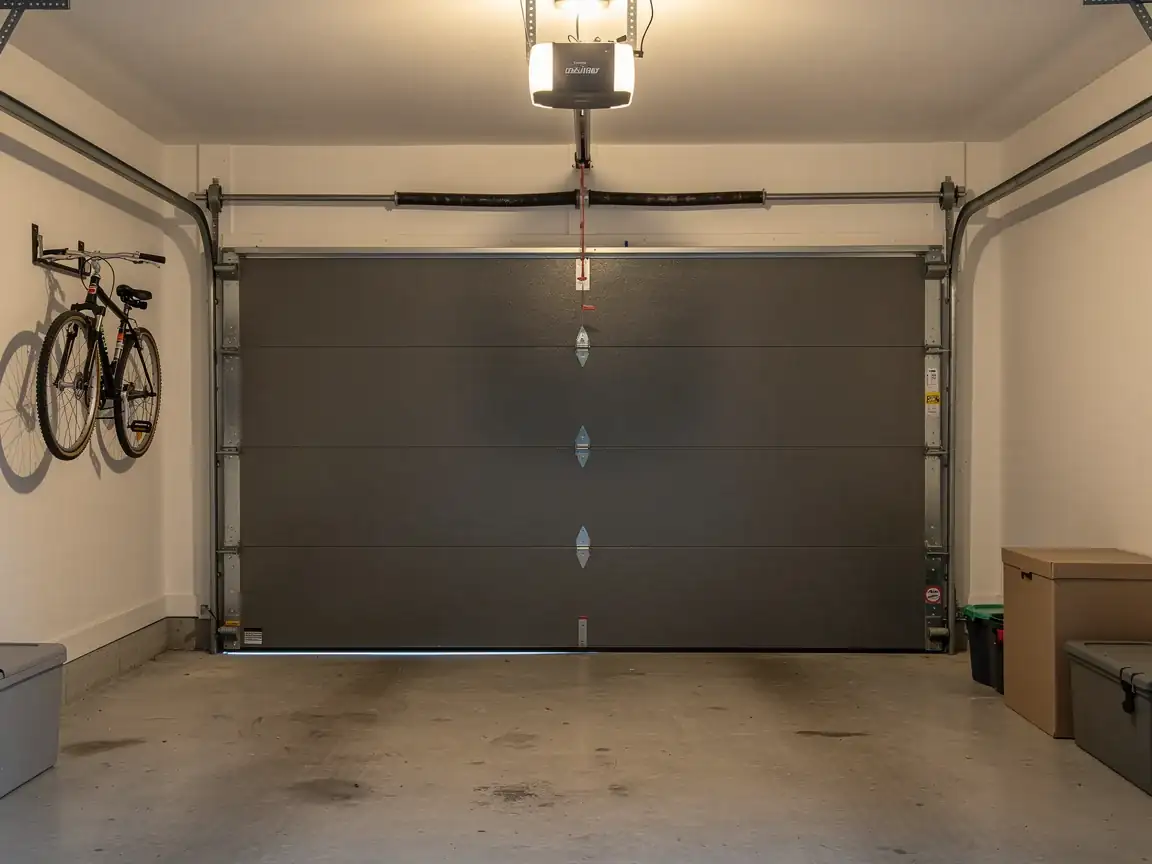
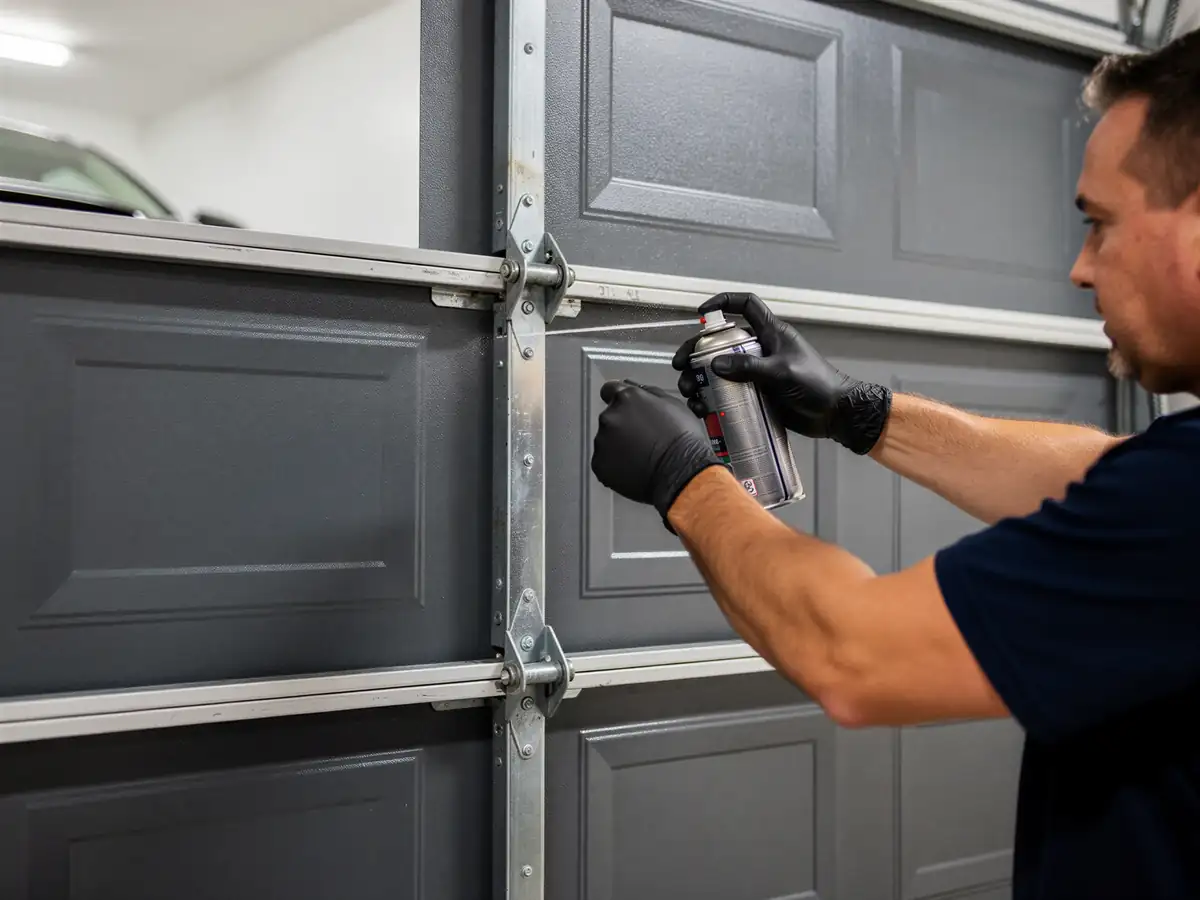
You'll usually notice it as a gap of daylight along one edge when the door's closed, or a section that looks slightly out of plane with the rest of the door when it's down. Sometimes it's paint cracking along a bend line before the panel visibly warps at all - that's the heat cycling working on a weak spot, and it's worth a call before the section fails outright and binds the door on its track.
How Long It Takes
Because we're coming from Queen Creek, about 14 miles out, we schedule Sacaton panel jobs rather than treat them as walk-up stops - we're not based here, so we plan the visit around having the right panel in hand. Once we're on site with the correct match, a single-panel swap on a residential door usually runs under an hour of hands-on work.
What adds time is the matching step before we arrive: confirming width, rib count, and whether the color is still in production. For a door built in the early-to-mid 1990s, that's often the longer part of the job, not the wrench work itself.