What Causes It Around Here
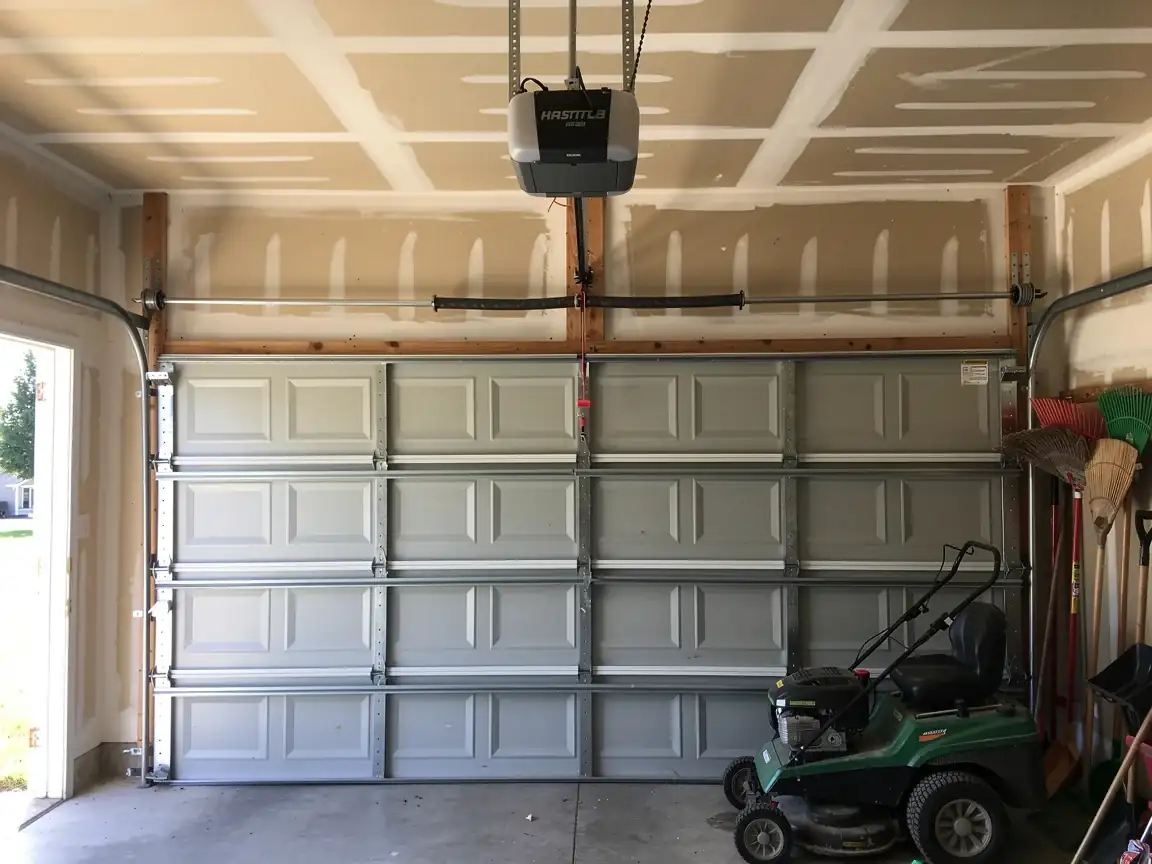
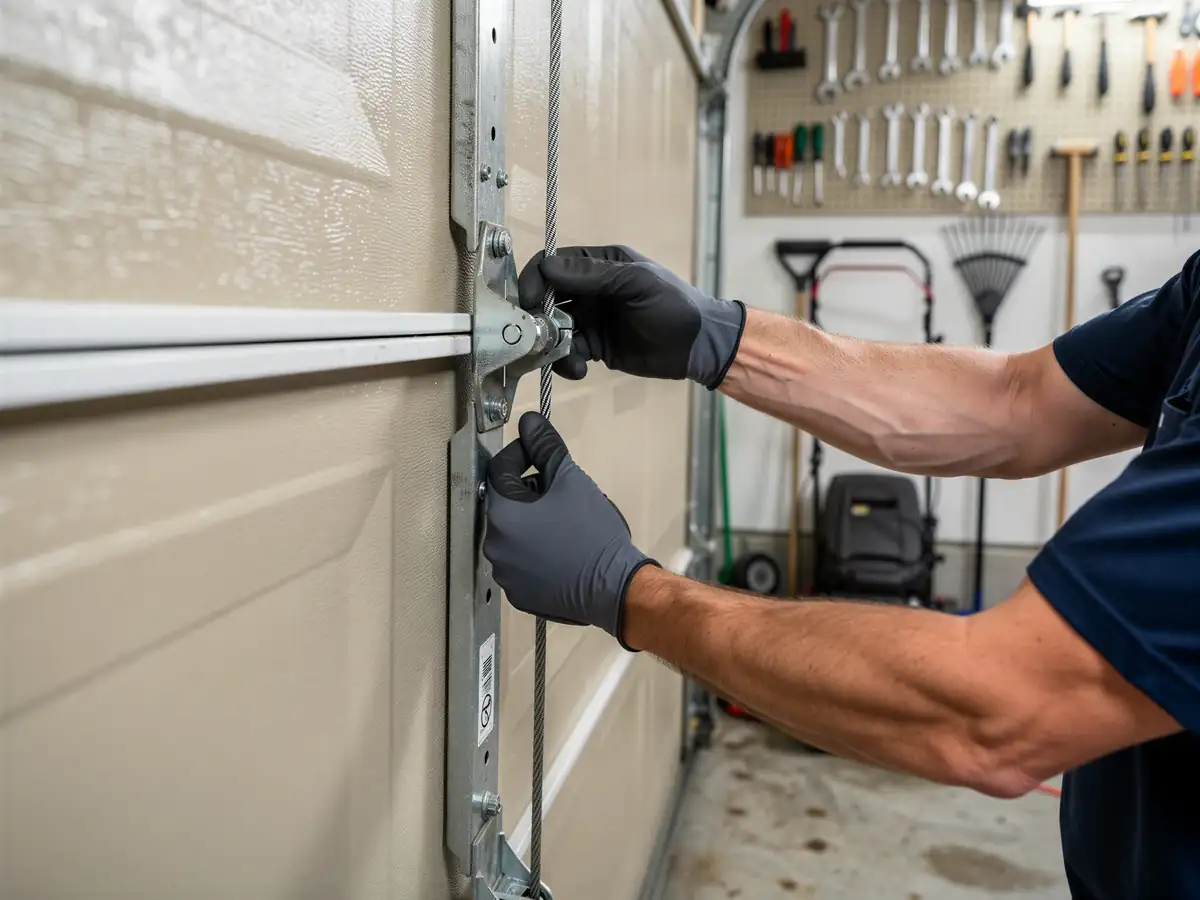
Most of the trouble we see on cable calls out this way starts with the hardware, not bad luck. Sun Lakes homes cluster around a median build year of 1990, which means a lot of doors are still running the original galvanized cables and drums that came with the house. That wire has been through roughly three decades of Arizona summers, and this area sits in a severe-heat climate band, which matters more for cables than people think. Steel cable doesn't like constant expansion and contraction against a drum groove - it work-hardens, then frays at the drum end where the bend radius is tightest.
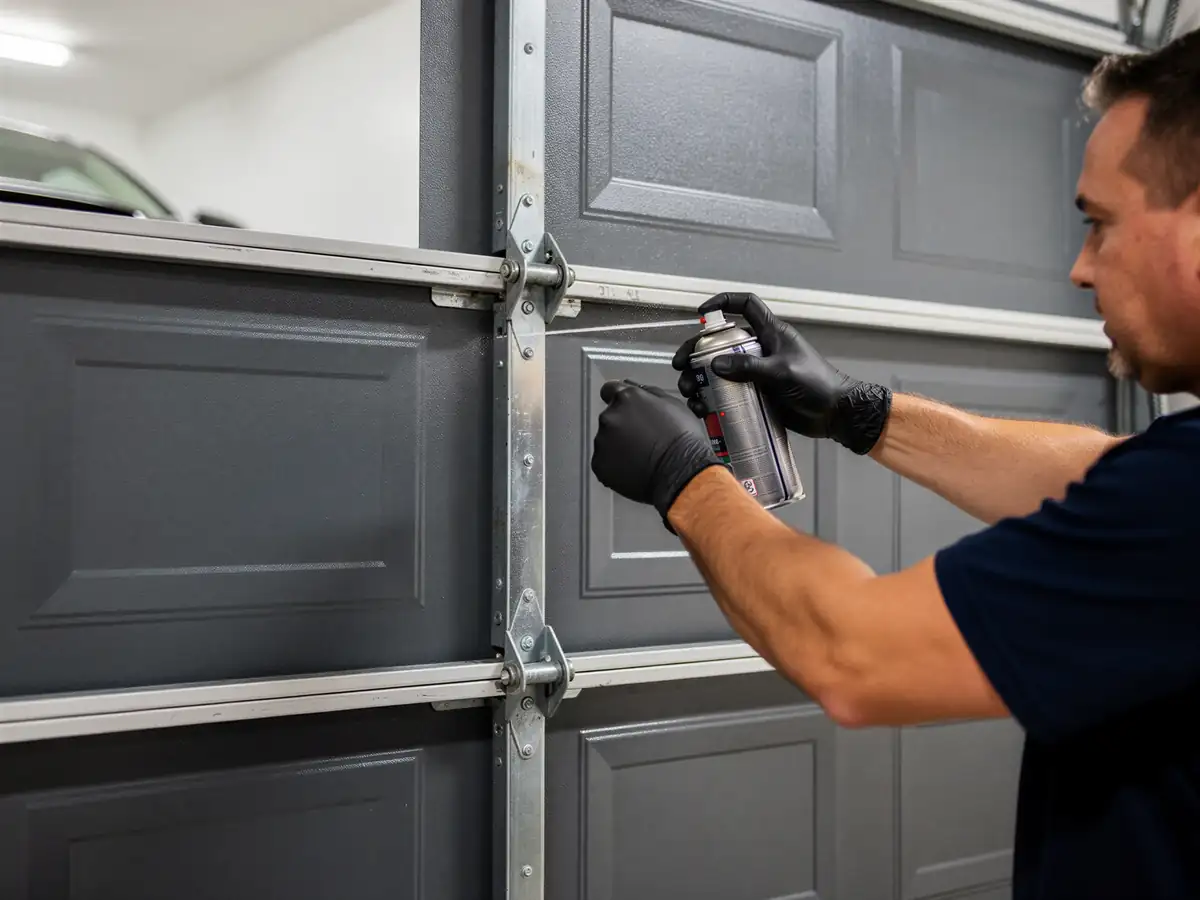
We also see a fair number of cables that let go not because they're old but because a roller seized up first and the cable took the extra load trying to compensate. On a 1990-vintage door, the rollers and the cable are usually original together, so if one is near the end of its life, the other usually isn't far behind. That's the pattern we plan for before we ever touch the drum.
The Symptom
A cable going bad rarely snaps without warning
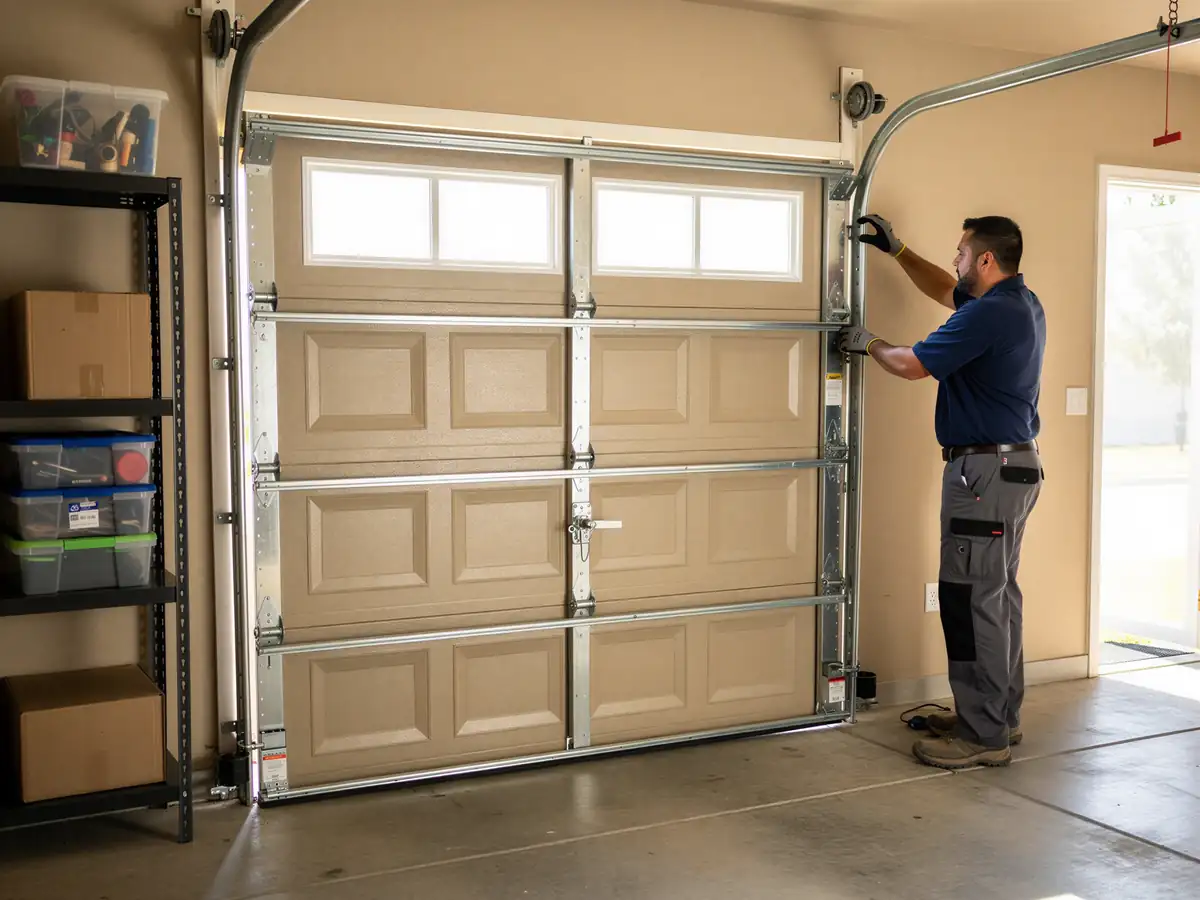
Usually one side of the door starts sitting a half-inch lower than the other, or the door tilts visibly as it opens - that's one cable carrying more than its share while the other has started to unwind off the drum. Some owners hear a sharp tick or pop near the bottom corner of the track right before it happens. Once a cable actually breaks, the door will drop hard on one side and jam in the track, or in a worse case come most of the way off the track entirely.
If the door is still up and just leaning, don't force the opener to run it
Running a door on one good cable can bend the track or crack a panel, and that turns a cable job into a bigger bill.
Can You Do This Yourself
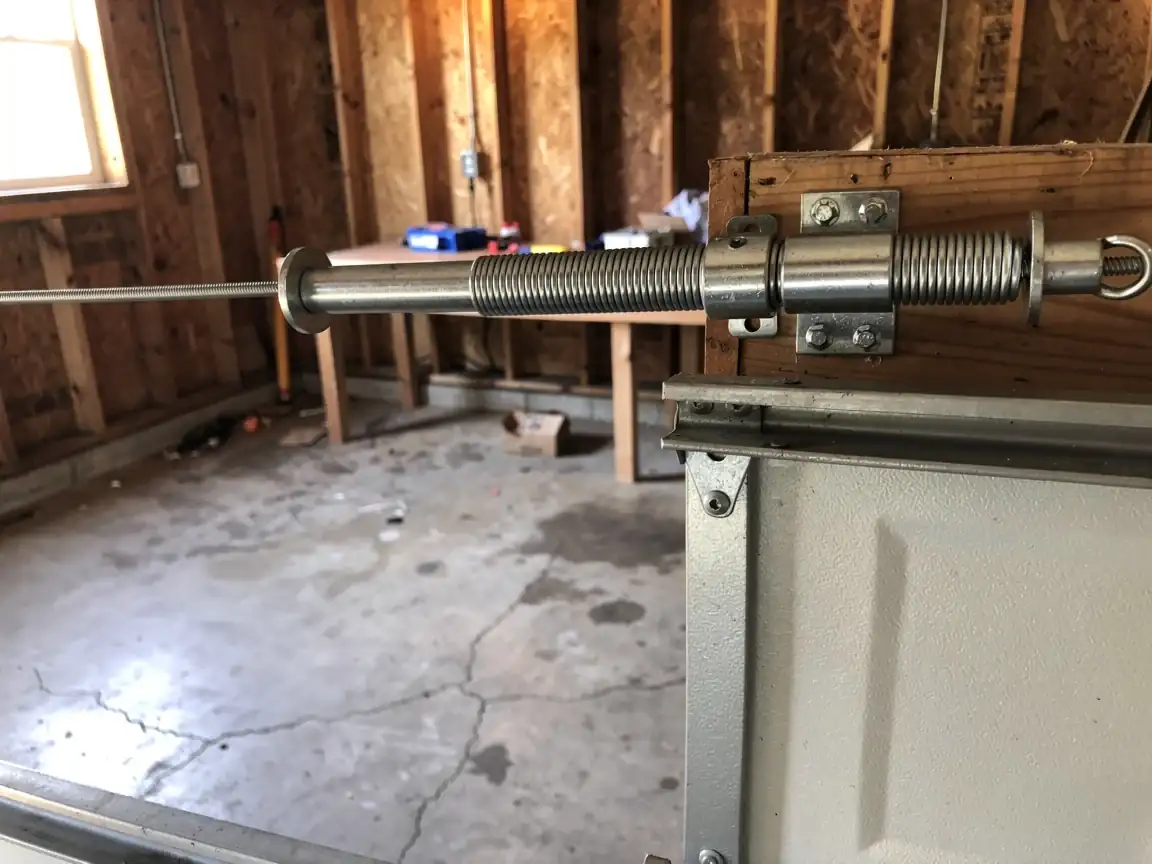
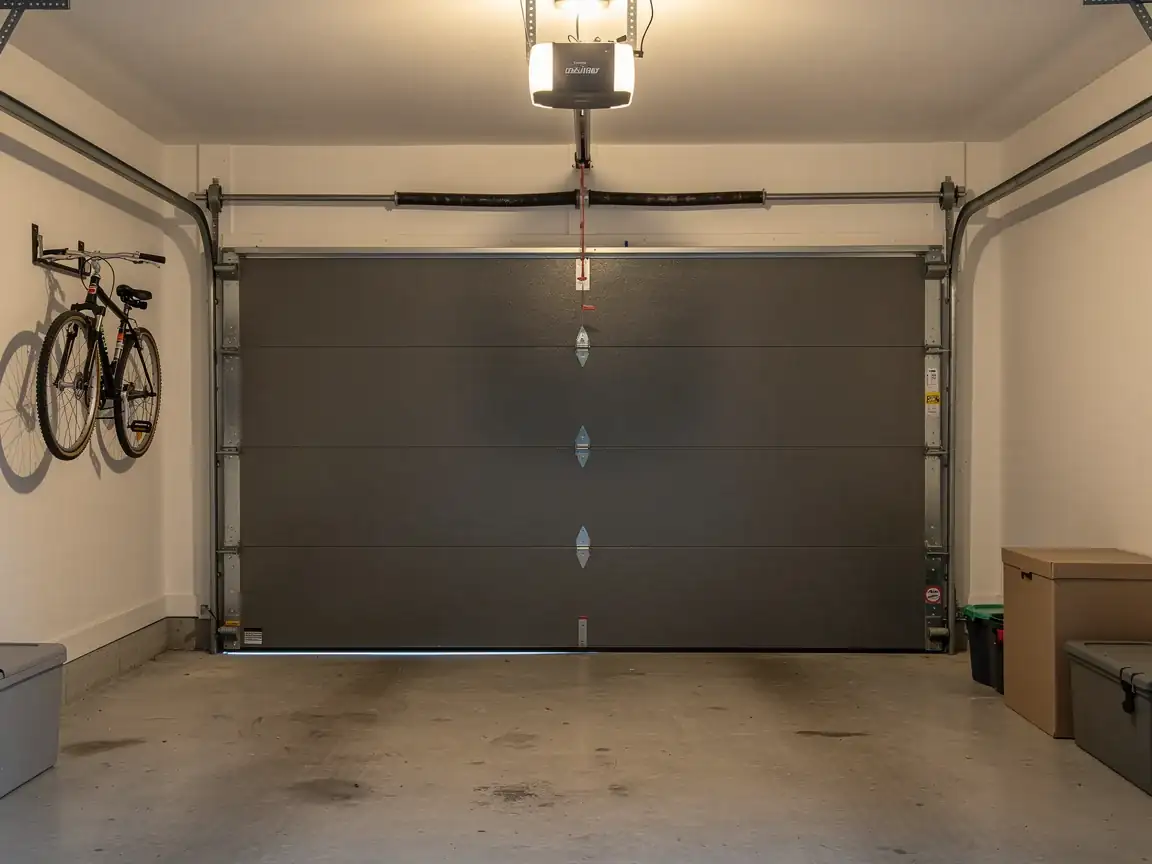
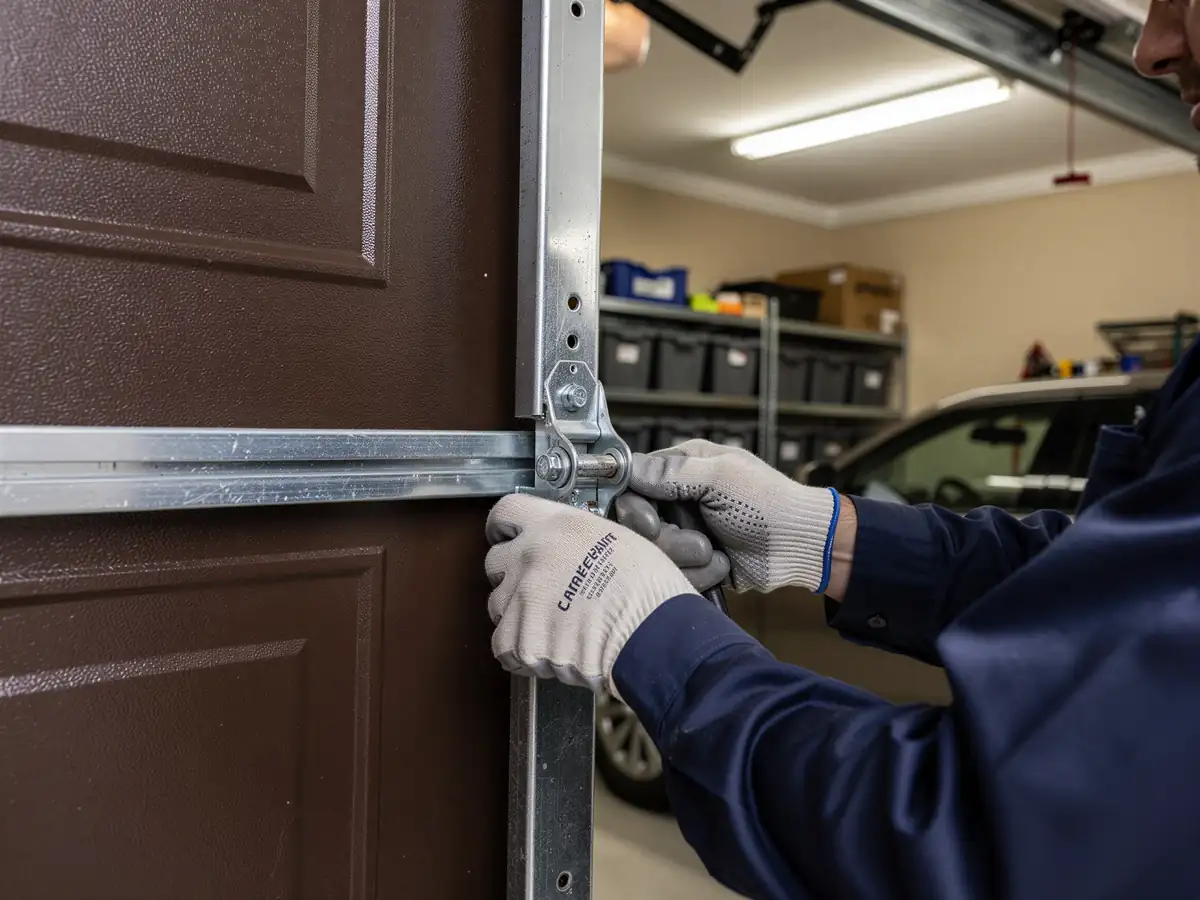
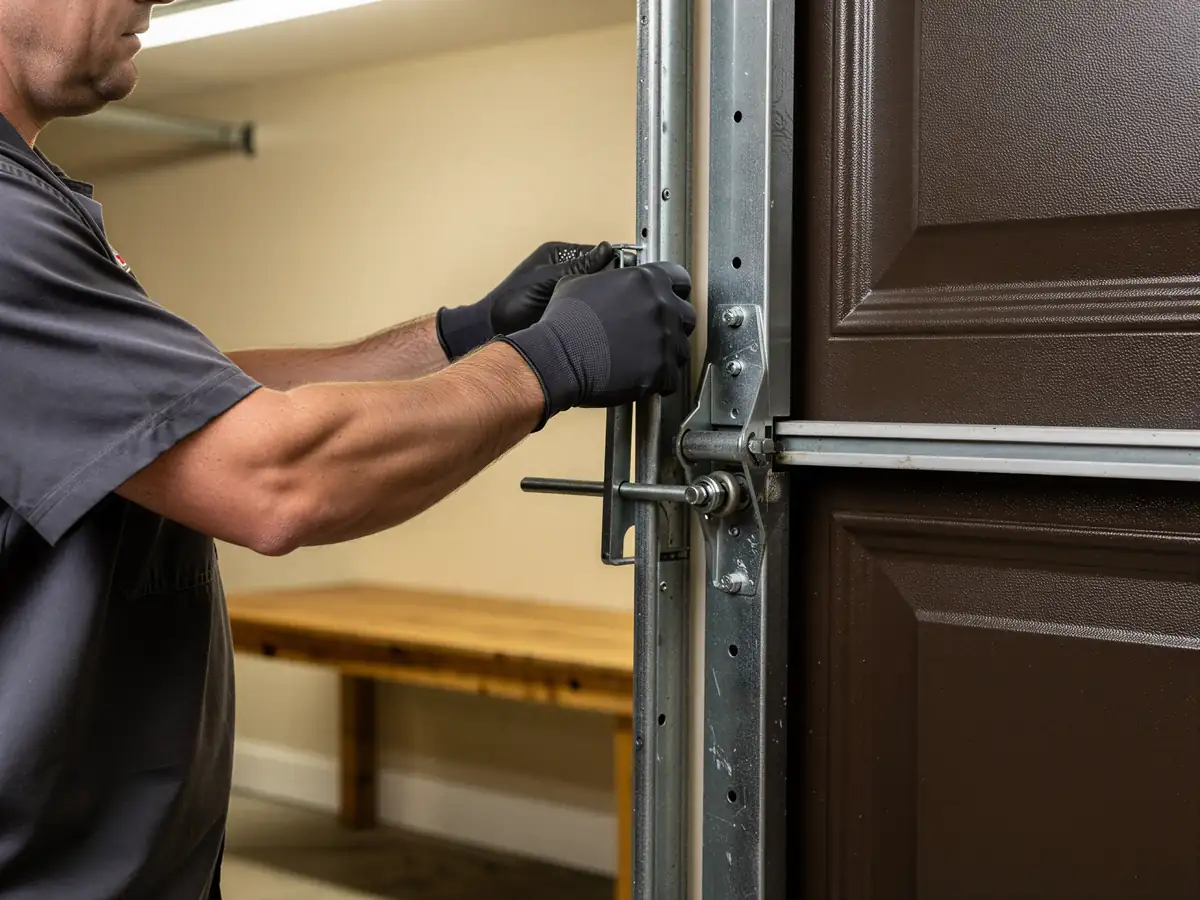
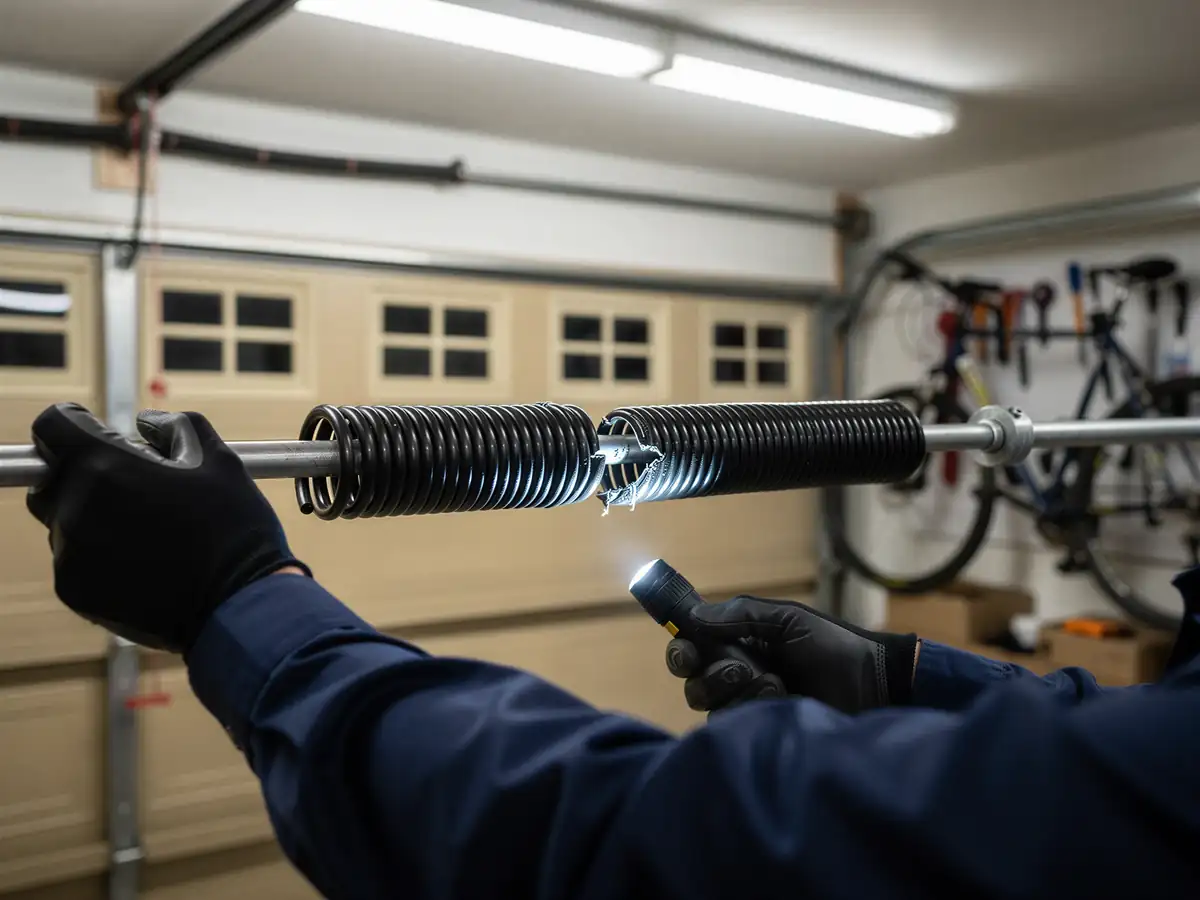
We'll say it plainly: this isn't a good DIY repair. The cable sits under spring tension through the whole system, and releasing that tension safely is the part that hurts people - not the cable swap itself. Torsion springs on a standard double door store enough force to break fingers or worse if the winding bars slip. Even on a lighter single door, a cable under load can snap back with real speed.
If you're comfortable with winding bars, vice grips, and working around a loaded spring, cable replacement itself is straightforward mechanical work. Most homeowners aren't set up for that first part, and it's not a skill worth learning on your own garage door. This is one we'd rather you call out for.
The Complications
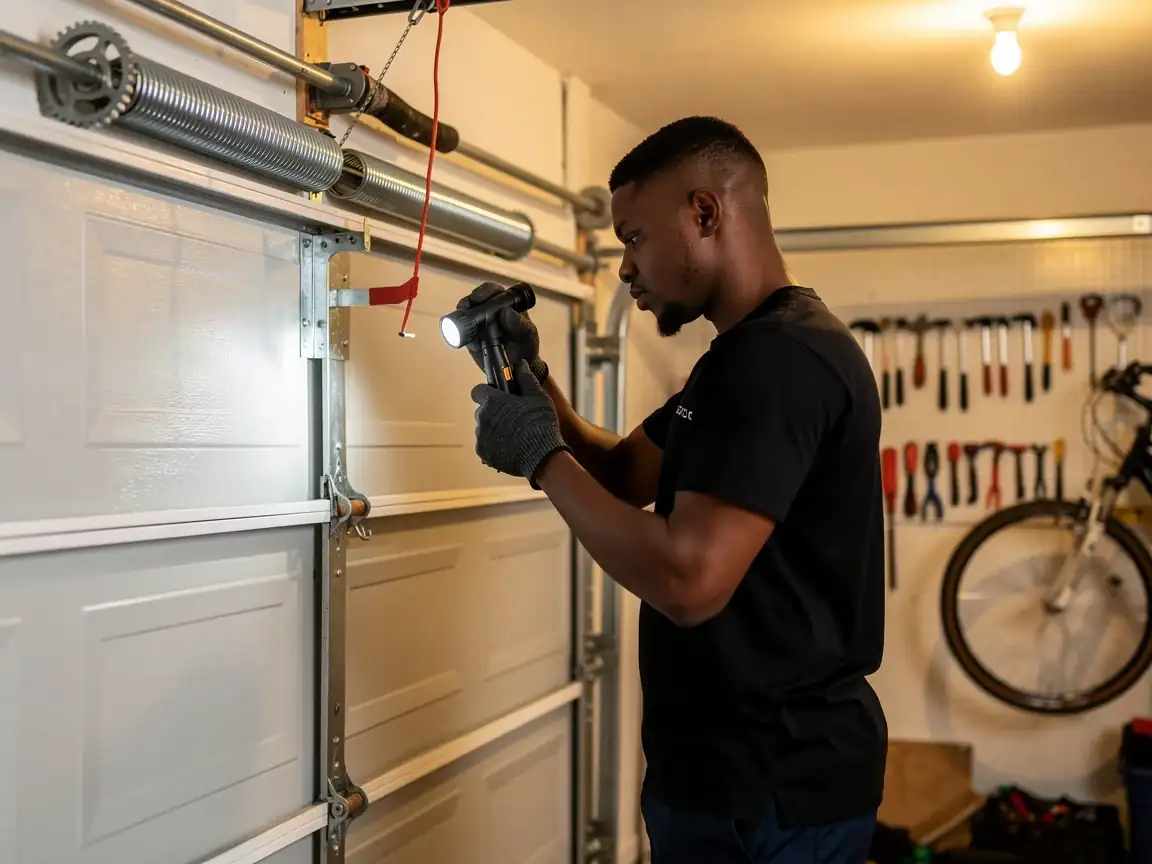
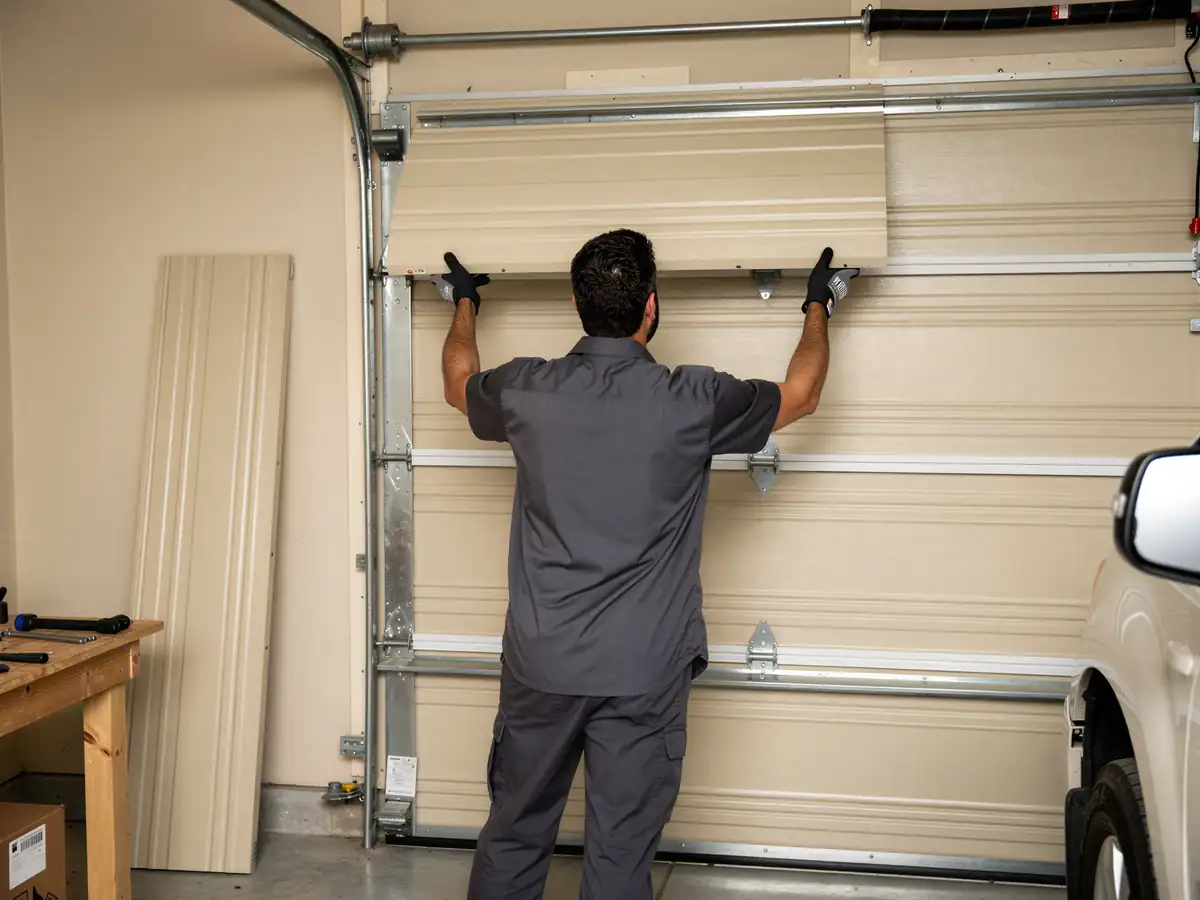
On a 1990-built door, the complication usually isn't the cable - it's everything attached to it. Drums wear a groove pattern that matches the original cable diameter, and if that drum is scored or the groove has worn unevenly, a new cable can still jump or bind even after a clean install. We check drum condition every time, because replacing cable on a bad drum just means a second call in a few months.
We also see end bearing plates that have rusted enough to bind the shaft, which changes how the whole system needs to be tensioned afterward. With roughly 8,650 households in this area and a good share of them on original garage hardware from the same build era, this combination - worn drum, stiff bearing, heat-brittled cable - shows up often enough that we check for it as a matter of course rather than an afterthought. One thing we won't do is sell a cable-only fix on a door where the drums or track are shot; replacing those parts costs more up front but it's the honest call.
How Long It Takes
A straightforward two-cable replacement
With good drums and no track damage, is usually a same-visit repair once we're on site - most of the time goes into releasing and resetting spring tension safely, not the cable swap itself. If we find a scored drum or a bound bearing plate while we're in there, that adds parts and time to the same visit rather than a return trip, since we carry common replacement hardware.
We're coming from Queen Creek, about 15 miles out
So factor that into when we can get there rather than how long the job takes once we arrive. We'll give you a time window on the phone before we drive out, based on what you describe over the phone about which side is sagging and whether the door still moves at all.
- 15 miles